





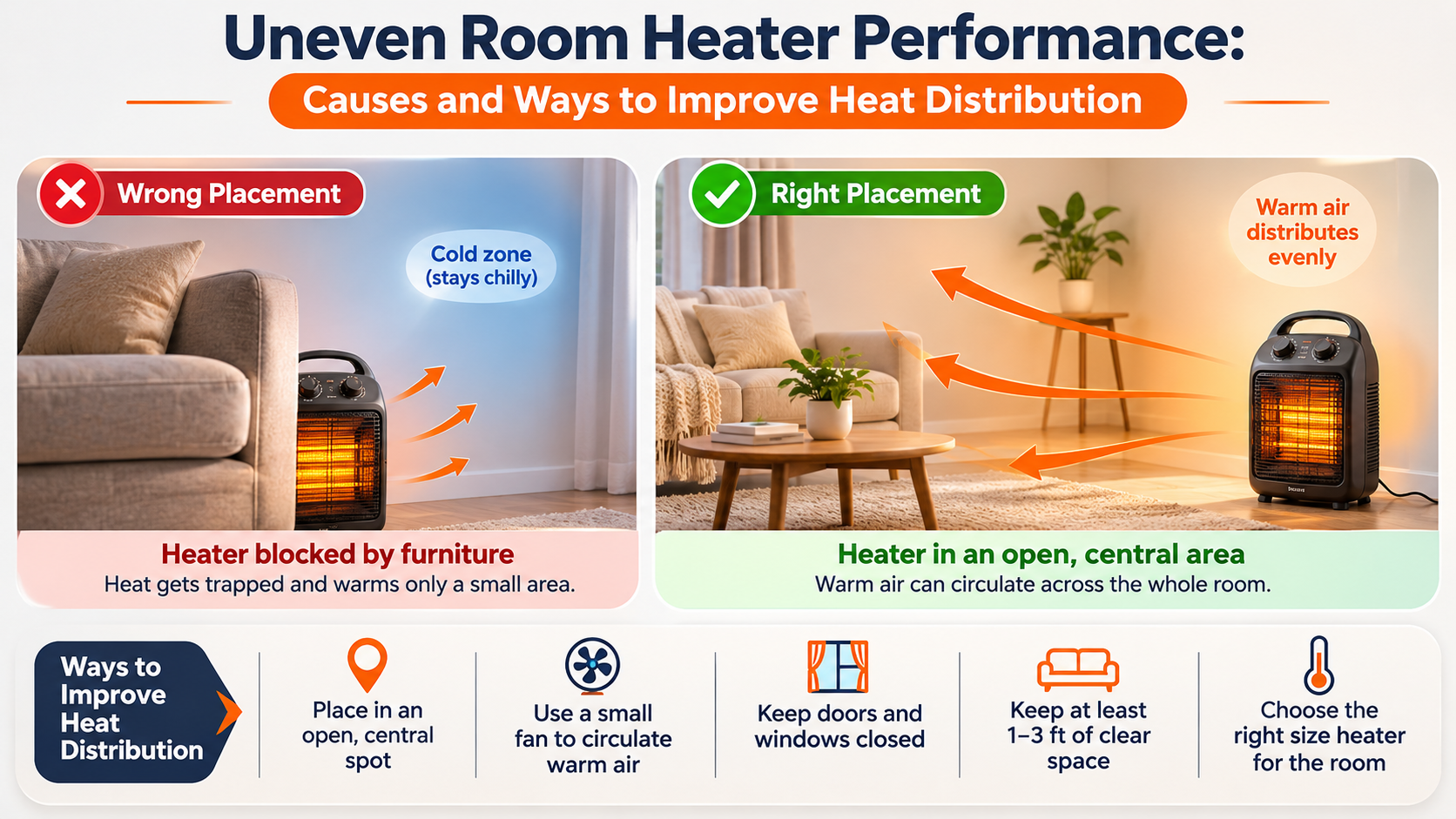

You switch on your room heater, sit close to it and feel perfectly toasty. Then you walk to the other side of the room and it feels like winter all over again. Your face is hot, your feet are freezing, and one corner never seems to warm up at all. If this sounds familiar, you are dealing with room heater uneven heating, one of the most common complaints people have during the cold season.
The good news is that uneven heating is rarely a sign that your heater is broken. In most homes it comes down to a handful of simple things: the wrong heater size, poor placement, the way warm air naturally behaves, drafts, or a thermostat that switches off too early. Every one of these can be fixed without spending much money.
In this complete guide you will learn why a room heater heats unevenly, how to find the real cause in your own room, ten practical fixes you can try today, and what to look for if you decide it is time to buy a better heater.
Quick Answer
A room heater heats unevenly because warm air rises, heat fades with distance, and cold air keeps leaking in from windows and doors. To fix it, match the heater wattage to your room size, place it near the coldest wall with clear space around it, close drafts, and gently circulate the air with a low-speed fan. If your heater has a built-in thermostat, give it 20 to 30 minutes to warm the whole room before judging the result.
What Does “Uneven Heating” Really Mean?
Uneven heating means that the temperature changes noticeably from one part of the room to another. You may notice one or more of these signs:
- It is very hot near the heater but cool just two or three metres away.
- The air near the ceiling feels warm while your feet and the floor stay cold.
- One corner, usually the one farthest from the heater or closest to a window, never warms up.
- The heater keeps switching on and off while the room still does not feel comfortable.
- The front of your body is warm and your back is cold.
A small temperature difference is normal in every room. A big difference, however, makes the room uncomfortable and also wastes electricity, because you end up running the heater longer or turning the settings higher than you should.
Why Does a Room Heater Heat Unevenly?
Before looking at the specific problems, it helps to understand three basic rules of heat that cause almost every case of uneven heating.

1. Warm air rises
Air that is heated by your heater becomes lighter and floats upward. It collects near the ceiling while cooler, heavier air settles near the floor. This layering effect is called thermal stratification. It is the reason your head can feel warm while your feet stay cold, and it is stronger in rooms with high ceilings.
2. Heat fades with distance
The closer you are to a heater, the more heat you feel. Radiant heaters (such as quartz or infrared models) warm people and objects directly in front of them, so anything outside the line of sight receives much less warmth. Even convection heaters, which warm the air, create a hot zone around the unit that gradually fades across the room.
3. Cold surfaces steal heat
Windows, outer walls, uncovered floors and gaps under doors constantly pull heat out of the room. The side of the room with the most cold surfaces will always feel colder, no matter how well the heater works.
6 Common Causes of Room Heater Uneven Heating

Cause 1: The Heater Is the Wrong Size
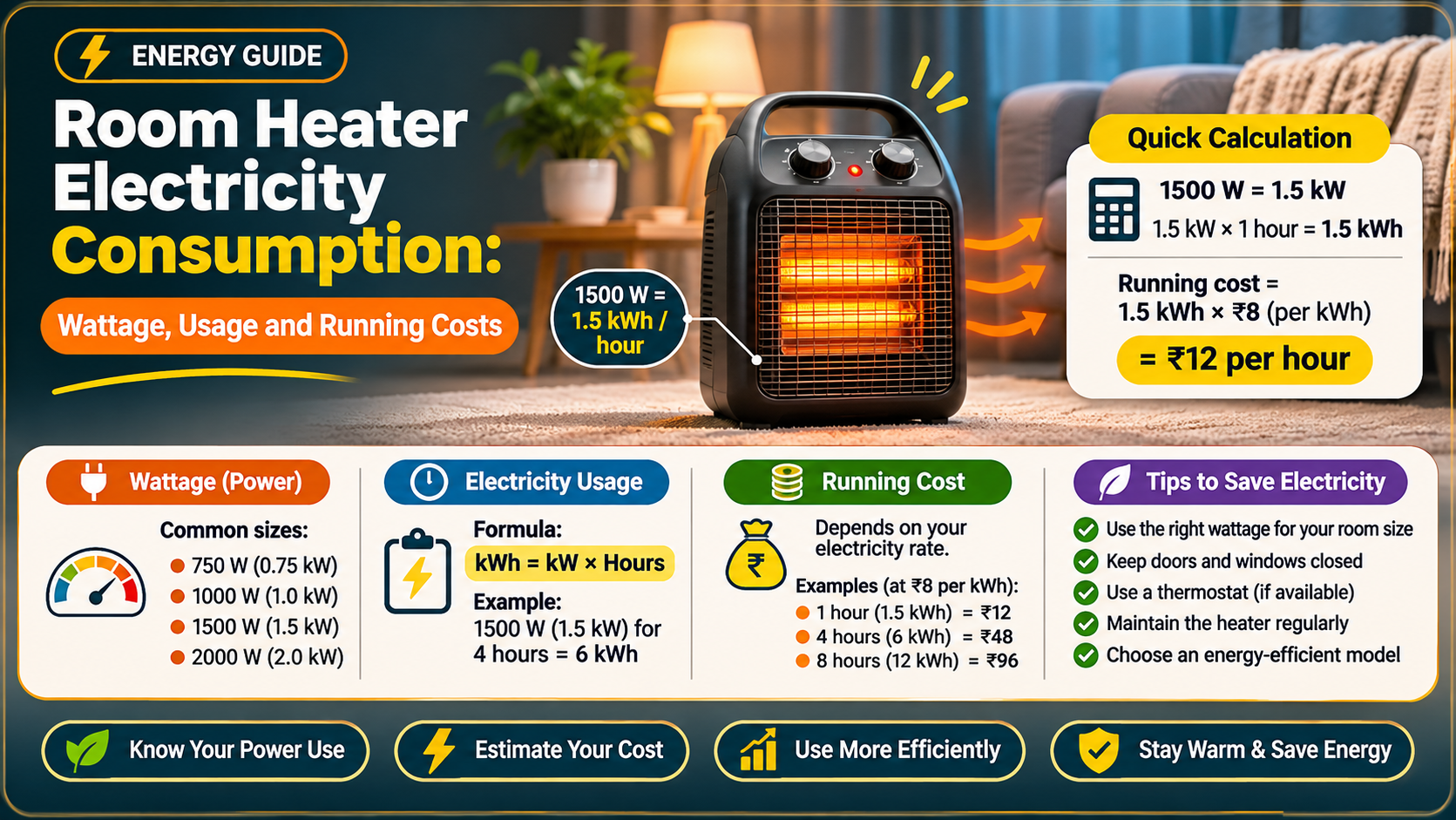
This is the number one reason for weak, uneven warmth. A heater that is too small for the room simply cannot push heat all the way to the far walls. As a general rule of thumb, a room needs about 10 watts of heating power for every square foot of floor area (roughly 100 watts per square metre) for a room with a standard ceiling height and average insulation.
| Room Size | Approx. Area | Suggested Heater Power |
|---|---|---|
| Small bedroom or study | 100 sq ft (9 m²) | About 1000 W |
| Medium bedroom | 150 sq ft (14 m²) | About 1500 W |
| Large bedroom or small living room | 200 sq ft (18.5 m²) | About 2000 W |
| Big living room | 300 sq ft (28 m²) | About 3000 W (two heaters work better) |
Treat these numbers as a starting point. Add more power if the ceiling is high, the room has large windows, or the walls are poorly insulated.
Cause 2: Poor Heater Placement
Where you put the heater matters as much as how powerful it is. A heater pushed into a corner, hidden behind a sofa or placed right next to thick curtains traps its own heat and cannot circulate warm air into the room. Heaters also behave badly when they are placed in the middle of a long room with the cold wall far away.
Cause 3: Rising Warm Air (Thermal Stratification)
As explained above, warm air floats to the ceiling. In a room with a high ceiling this layer of warm air can sit far above your head, while the area where you actually live, from the floor to about shoulder height, stays cool.
Cause 4: Drafts and Weak Insulation
If cold air is leaking in through window frames, door gaps, vents or an unsealed balcony door, the heater is fighting a losing battle. Single-pane windows and uncovered tile or concrete floors also pull warmth away quickly. In this case the heater is not the problem. The room is leaking heat as fast as you produce it.
Cause 5: Blocked Airflow and Dust Build-Up
Fan heaters, ceramic heaters and convector heaters need free airflow. Dust and lint on the air intake or outlet grille reduce the amount of air the heater can move, which means less warm air reaches the room. Furniture, laundry or boxes placed too close to the heater block the airflow in the same way.
Cause 6: Thermostat, Heating Element or Power Problems
Most heaters have a built-in thermostat that measures the temperature right next to the unit. Because that spot warms up first, the heater may switch off long before the rest of the room is comfortable. This is not a defect, but it is a very common reason for uneven warmth.
In some cases there is a real fault. A damaged heating element, a failing thermostat or a worn fan motor can cause weak or patchy heat. Low or unstable mains voltage can also reduce the output of an electric heater, so it delivers less warmth than the wattage printed on the label.
Which Type of Room Heater Heats Most Evenly?
Different heater types distribute heat in very different ways. Choosing the right type for your room is one of the easiest ways to reduce uneven heating.
| Heater Type | How It Heats | Evenness | Warm-Up Speed |
|---|---|---|---|
| Oil-filled radiator | Heated oil warms the fins, which release heat by convection and radiation | Very good | Slow |
| Fan heater | A fan blows air over a hot element | Fair (directional) | Very fast |
| Ceramic (PTC) heater | Ceramic plates heat the air, usually with a fan and oscillation | Good with oscillation | Fast |
| Convector panel heater | Air passes naturally over a heated panel and rises into the room | Good | Medium |
| Quartz / halogen radiant heater | Infrared rays warm people and objects in front of it | Poor for whole rooms | Instant (spot heating) |
Bottom line: for steady, even warmth in a bedroom or living room, an oil-filled radiator (ideally with a built-in fan) or an oscillating ceramic heater is usually the better choice. Radiant heaters are great for warming a person at a desk, but they are a poor choice for heating a whole room evenly.
10 Proven Ways to Fix Room Heater Uneven Heating
1. Place the heater near the coldest part of the room
This sounds backwards, but it works. When the heater sits under or near the window, or against the coldest outer wall, it warms the cold air as it falls and rises, which creates a gentle circulation across the room. Keep the heater at floor level, because warm air will rise by itself.

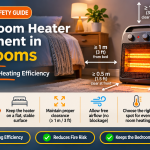
2. Keep at least one metre of clear space around it
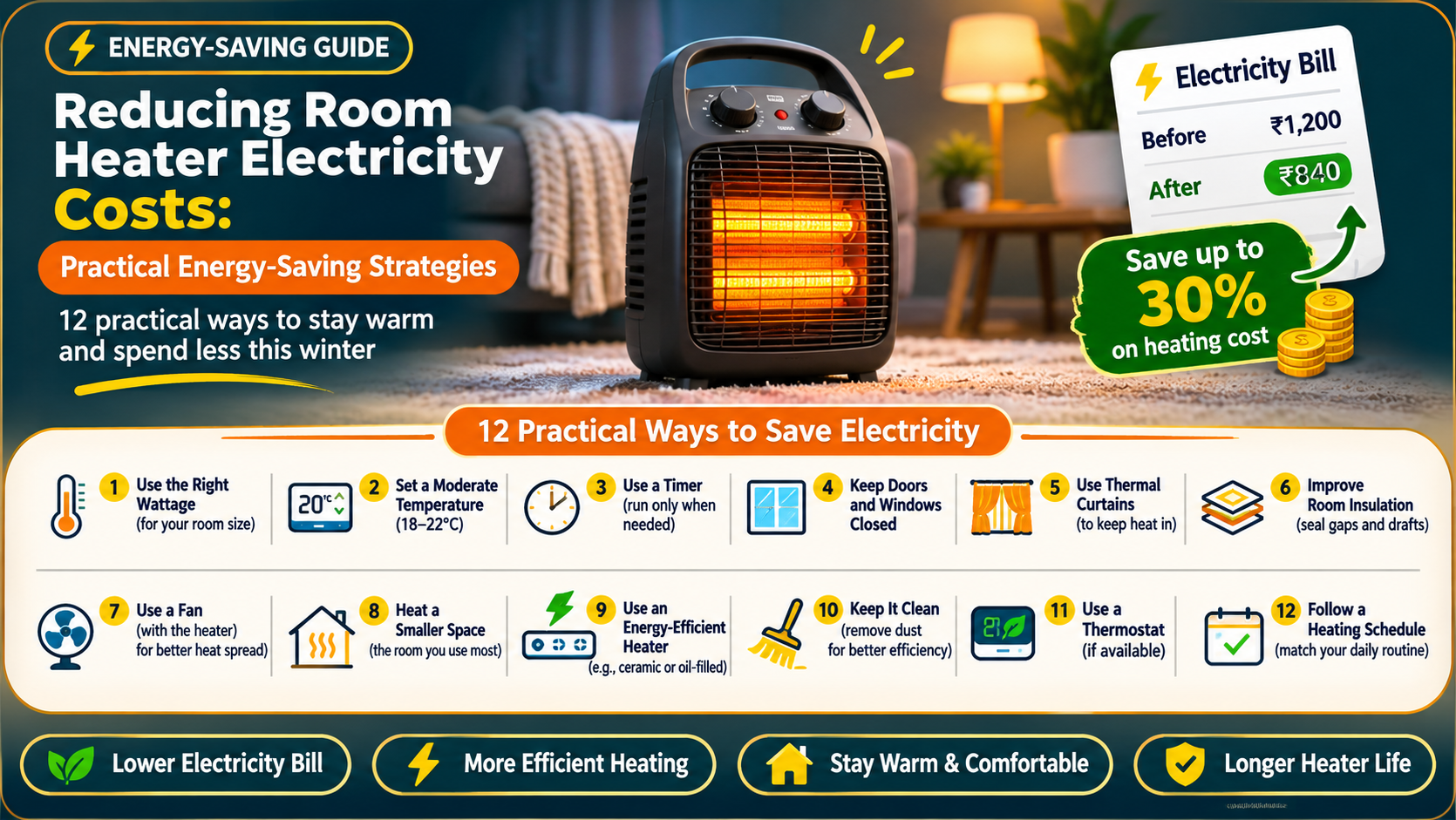
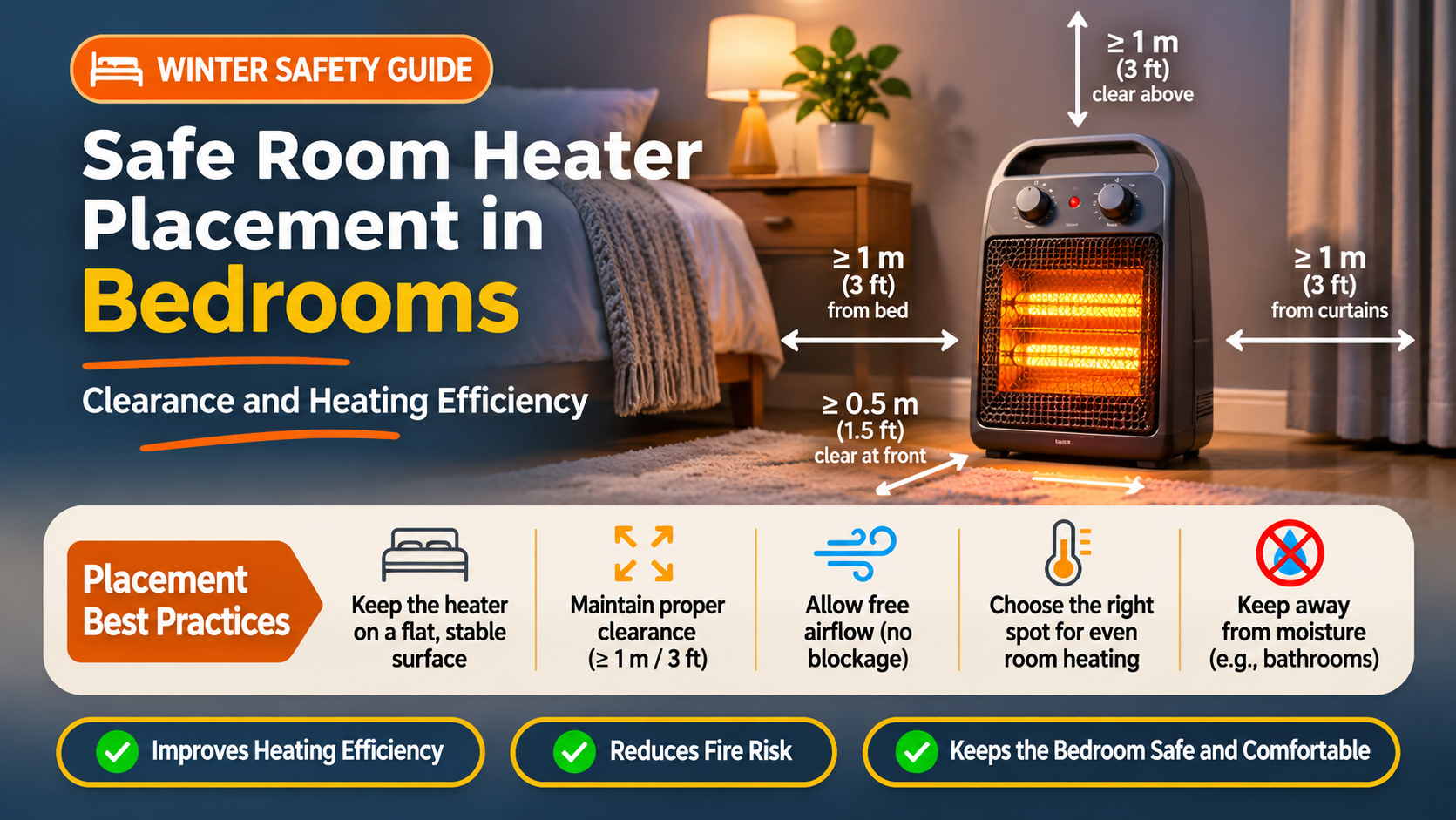
Move sofas, beds, curtains, clothes and boxes away from the heater. Blocked heaters cannot move air, and they can also become a fire risk. A clear space of about one metre (3 feet) at the front and sides is a good habit.
3. Choose the right size heater
Use the wattage guide earlier in this article. If your room is large or open-plan, two smaller heaters placed at opposite ends usually heat more evenly than one big heater in a single spot.
4. Use a low-speed fan to mix the air
A small fan on its lowest setting can move warm air from the heater zone to the colder parts of the room. Place it on the far side of the room so that it moves air along the room, and keep it clear of the heater and its cable. If you have a ceiling fan with a winter (reverse) mode, run it on low speed to gently bring the warm air near the ceiling back down to where you sit.
5. Seal drafts around doors and windows
Use draft stoppers or weather strips on door bottoms, rubber seals around window frames, and window insulation film on single-pane glass. These are cheap upgrades that make a noticeable difference to how evenly and how quickly a room heats up.
6. Use thick curtains and rugs
Heavy or lined curtains reduce heat loss through windows at night. Rugs and carpets stop the floor from pulling heat from your feet. Keep curtains from touching or hanging over the heater.
7. Close doors and heat only the room you use
Open doors let warm air escape into hallways and other rooms. Closing the door keeps the heat where you need it and helps a single heater do its job properly.
8. Give the heater enough time
Oil-filled radiators in particular warm up slowly and may take 15 to 30 minutes or more to bring a room to a comfortable level. Start the heater early on the highest setting, then lower it once the room is warm. Judging the heater in the first five minutes often leads to the wrong conclusion.
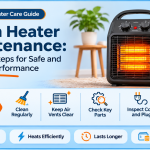
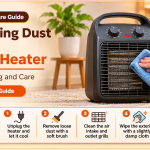
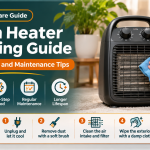
9. Clean the heater regularly
Unplug the heater, let it cool completely, and use a soft brush or a vacuum cleaner to remove dust from the grilles, vents and fan area. Clean airflow means stronger and more even warmth. Never wash the electrical parts with water.
10. Check the thermostat and the heater itself
If the heater switches off too soon, try setting the thermostat a little higher or moving the heater to a spot where its sensor is not sitting in a pocket of hot air. If the heat is weak even after you tried everything else, check the cable and plug for damage, and have a qualified technician inspect the element, thermostat and fan. Do not open sealed parts such as the oil chamber of a radiator yourself.
Pro Tip
Try one change at a time and give the room about half an hour. Start with placement and drafts, because these two fixes cost almost nothing and solve the problem in most rooms.
Quick Troubleshooting Table
| What You Notice | Most Likely Cause | What To Do |
|---|---|---|
| Hot near the heater, cold across the room | Heater too small or heat not circulating | Increase wattage, add a low-speed fan, move the heater to the cold side |
| Warm head, cold feet | Warm air rising to the ceiling | Keep the heater at floor level, use rugs, circulate air gently |
| One corner always cold | Draft, window or outer wall | Seal gaps, add thick curtains, place the heater closer to that side |
| Heater keeps switching off | Thermostat reading hot air near the unit | Raise the setting, increase space around the heater, improve air circulation |
| Weak airflow from a fan heater | Dust on grille or intake | Unplug, cool down and clean the vents |
| Weak heat even in a small room | Low voltage or a faulty element | Check the power supply and get the heater inspected by a technician |
How to Choose a Room Heater That Heats Evenly
If your current heater cannot keep up even after the fixes above, it may be time to upgrade. These are the features that make the biggest difference for even heating:
- The right wattage for your room. Use the sizing guide in this article and add some extra power for large windows or high ceilings.
- Adjustable thermostat. It keeps the temperature steady and prevents the heater from running at full power all night.
- Multiple heat settings. Two or three power levels let you heat the room quickly and then maintain it with less energy.
- Oscillation or a wide-angle fan. This spreads warm air across a larger area instead of blasting it in a single direction.
- Fan-assisted oil-filled design. A built-in fan on an oil-filled radiator combines steady, soft heat with faster air circulation.
- Tip-over and overheat protection. These are essential safety features for any heater used at home.
- Timer and remote control. A timer is useful for bedrooms, since it switches the heater off automatically.
- Low noise level. Check this if you plan to use the heater while sleeping or working.
- Wheels and a good cable length. They make it easy to move the heater to the best position without using an extension cord.
- A recognised safety certification. Look for approval marks that are valid in your country.
Important Safety Rules When You Fix Uneven Heating
Safety First
Trying to heat a room faster should never come at the cost of safety. Follow these basic rules every time you use a heater.
- Plug the heater directly into a wall socket. Avoid extension cords and multi-plug strips, because high-wattage heaters can overheat them.
- Keep curtains, bedding, clothes, paper and furniture well away from the heater.
- Never cover a heater or dry clothes on it.
- Do not use an electric heater in a wet or damp area such as a bathroom.
- Do not leave a heater running while the room is empty, and use a timer if you use it while sleeping.
- If the plug or cable feels very hot, smells burnt or looks damaged, stop using the heater and have it checked.
- If your home has unstable voltage, use a properly rated voltage stabilizer that can handle the heater load.
Frequently Asked Questions
Why is my room heater only hot on one side?
Most likely the heater is a radiant or fan-forced model that sends heat in one direction. Rotate or oscillate the heater, move it away from walls and corners, and use a low-speed fan to mix the air.
Why do my feet stay cold even when the heater is on?
Because warm air rises. The heated air collects higher up in the room while cooler air stays near the floor. Keep the heater on the floor, add a rug, seal gaps under doors and circulate the air gently.
Does a fan help a heater warm a room evenly?
Yes, in most cases. A fan on low speed helps mix the warm and cool layers of air and carries warmth to the far side of the room. Keep it at a safe distance from the heater and do not point it directly into the front of the heater.
Which heater type heats a room most evenly?
Oil-filled radiators and oscillating ceramic heaters usually give the most even results for whole-room heating. Radiant heaters are better for spot heating, where one person sits in front of the heater.
Where is the best place to put a room heater?
Near the coldest wall or the window, at floor level, with at least one metre of clear space around it. Avoid corners and avoid placing it behind furniture or curtains.
How long should a heater take to warm a room?
A fan or ceramic heater can make a small room feel warmer within a few minutes. An oil-filled radiator is slower and may need 15 to 30 minutes or more. The time depends on the room size, insulation and the heater’s wattage.
Is it normal for an oil-filled heater to be hotter at the top than at the bottom?
Yes. Heated oil rises inside the fins, so the upper part usually feels hotter, especially at the start. If the whole heater stays cold or the heat is weak after a long time, have it checked.
Can one heater warm two rooms?
A single room heater is designed for one room. Opening the door and expecting it to heat a second room usually leads to weak and uneven warmth in both. Use one heater for each room you actually use.
Final Thoughts
Room heater uneven heating is frustrating, but it is almost always fixable. Start with the basics: choose a heater with enough power, place it near the coldest part of the room with clear space around it, and stop cold air from leaking in through gaps. Then improve the air movement with a low-speed fan and give the heater enough time to do its job.
If you have tried all of these steps and your room is still uncomfortable, upgrading to an oil-filled radiator with a fan or an oscillating ceramic heater of the right size will give you the warm, even comfort you expect, without the hot spots and cold corners.