





When the temperature drops, a room heater is the quickest way to make one space comfortable. It is also one of the appliances that can push your electricity bill up the fastest. Many people plug one in, enjoy the warmth, and only find out the real cost when the monthly bill arrives.
The good news is that room heater electricity consumption is easy to understand once you know three things: how many watts your heater uses, how many hours you run it, and how much your electricity company charges per kilowatt-hour. This guide walks through each of them with simple formulas, real cost examples, and practical ways to lower the number on your bill without freezing.
Key takeaways
- Most portable electric room heaters use between 500 and 2,000 watts. The most common maximum is 1,500 watts.
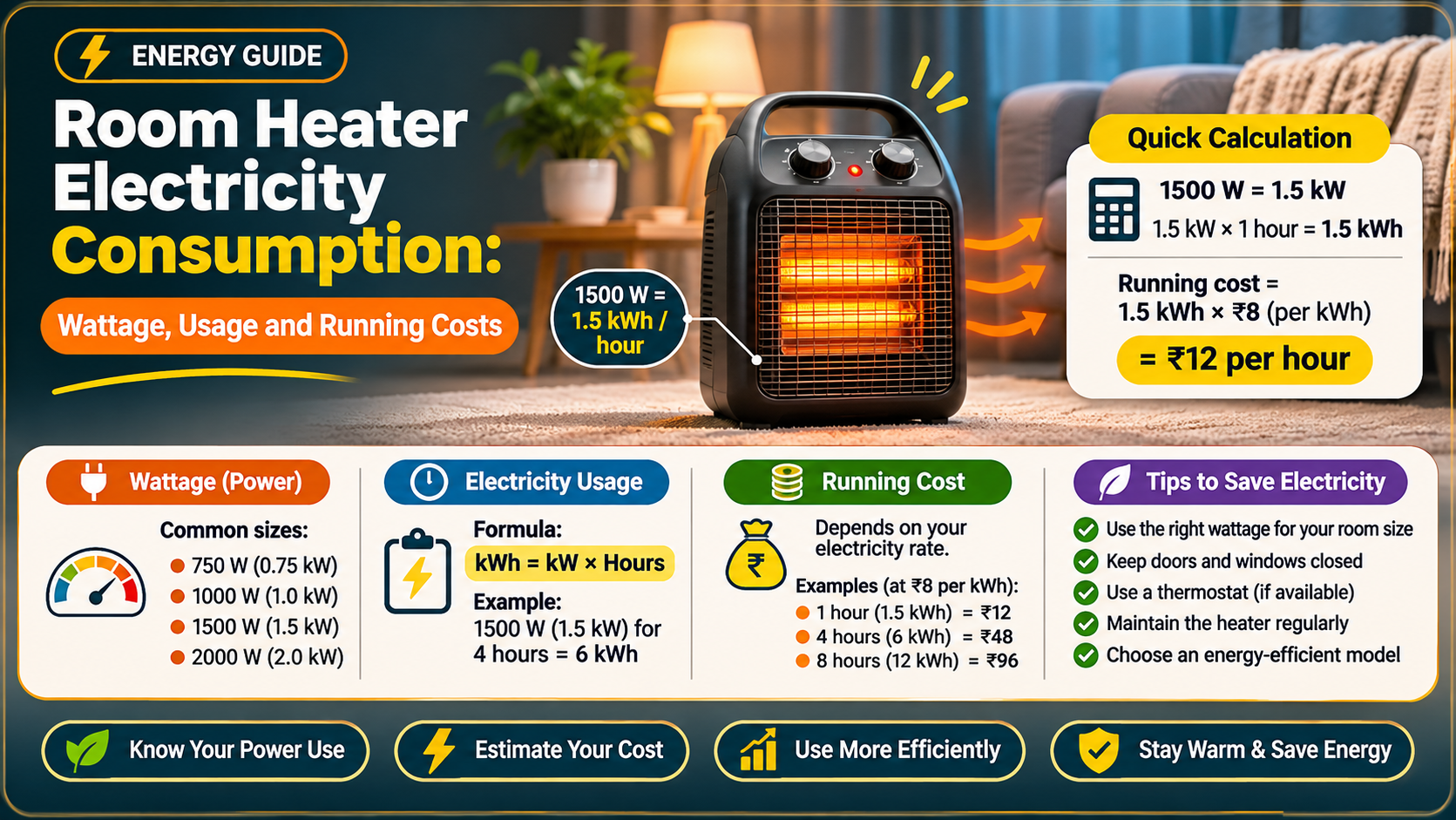
- A 1,500 W heater running at full power uses 1.5 kWh of electricity every hour.
- At an example rate of $0.16 per kWh, that is about $0.24 per hour, $1.92 for eight hours, and roughly $58 for a month of eight hours a day.
- Thermostats make heaters switch off and on, so real consumption is usually lower than the full-power figure.
- Every electric resistance heater turns practically all of its electricity into heat. The real savings come from how, where and when you use it.
How much electricity does a room heater use?
Electric consumption is measured in watts (W) while a device is running, and in kilowatt-hours (kWh) over time. A kilowatt-hour is simply 1,000 watts used for one hour. This is the unit your electricity company bills you for.
Portable room heaters are usually built with a few power settings. Many models offer something like 750 W on low and 1,500 W on high, while some mid-size or larger units go up to 2,000 W or more where the supply voltage allows it. Small personal desk or under-desk heaters are often in the 200 to 500 W range.
For comparison, a 1,500 W heater draws about as much power as a typical hair dryer or an electric kettle. The difference is that a kettle runs for a few minutes, while a heater may run for hours.
If you want to think in heat terms, 1,500 watts of electricity produces roughly 5,100 BTU of heat per hour. That figure is useful when you compare an electric heater with a gas or oil heater that is rated in BTU.
The simple formula to calculate room heater running cost
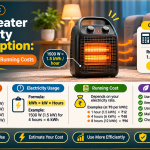
You do not need special tools to estimate what a heater costs. Use these steps:
- Find the wattage. It is printed on the label at the back or bottom of the heater, or in the manual.
- Multiply the watts by the hours you use it per day, then divide by 1,000. The result is kilowatt-hours (kWh) per day.
- Multiply the kWh by your price per kWh. You can find that rate on your electricity bill.

Worked example
Say you have a 1,500 W heater and you run it for 8 hours a day at full power.
- 1,500 W × 8 hours ÷ 1,000 = 12 kWh per day
- 12 kWh × $0.16 = $1.92 per day
- $1.92 × 30 days = $57.60 per month
The $ sign and the $0.16 rate are used here only as an example. Replace them with your own currency and the price per unit shown on your latest bill, and the same formula will work anywhere in the world.
Room heater electricity cost at different rates
Electricity prices vary a lot between countries, states and even time of day. The table below shows what a 1,500 W heater running at full power costs at three example prices, so you can find the row closest to your own rate.
| Usage (1,500 W, full power) | Energy used | At 0.12 per kWh | At 0.16 per kWh | At 0.25 per kWh |
|---|---|---|---|---|
| 1 hour | 1.5 kWh | 0.18 | 0.24 | 0.38 |
| 8 hours | 12 kWh | 1.44 | 1.92 | 3.00 |
| 24 hours | 36 kWh | 4.32 | 5.76 | 9.00 |
| 30 days, 8 hours a day | 360 kWh | 43.20 | 57.60 | 108.00 |
Keep in mind that these are worst-case numbers, because they assume the heater runs at full power without stopping. In real life a thermostat usually lowers the total, as explained below.
Running cost by heater wattage
A higher wattage heater uses more electricity every hour, but it also warms the room faster. The chart shows what different wattages cost over a month when the heater runs four hours a day.

The pattern is straightforward: double the wattage and you double the energy used while the heater is running. That is why simply choosing a heater that is too large for the room is an expensive mistake.
Rated power vs. real power: what the thermostat does
The wattage on the label is the maximum the heater can draw. Most modern heaters have a thermostat that switches the heating element off once the room reaches the temperature you set, and back on when the room cools down.
This means the heater may only draw full power for part of the time. In a well-insulated room that has already warmed up, a heater may run at full power for only a fraction of each hour. In a cold, drafty room it may run almost non-stop. So your actual consumption depends on:
- how cold it is outside,
- how well the room is insulated and sealed,
- the size of the room and the height of the ceiling,
- the temperature you set, and
- whether doors and windows are kept closed.
A heater with no thermostat, or one set to the maximum, will keep drawing full power for as long as it is switched on.
Do different types of room heaters use different amounts of electricity?
This is one of the most common myths in home heating. Electric resistance heaters, which include ceramic, oil-filled, infrared, fan and convection models, all convert nearly 100 percent of the electricity they use into heat. A 1,500 W ceramic heater and a 1,500 W oil-filled radiator both put about 1,500 W of heat into your room.
The differences are in how the heat is delivered and how it feels:

- Ceramic fan heaters warm up quickly and push warm air into the room, which suits small spaces and short use. They can be noisy and the air can feel dry.
- Oil-filled radiators take longer to warm up, but the hot oil keeps the surface warm after the element switches off, so the heater cycles on and off and delivers quiet, steady warmth.
- Infrared (radiant) heaters warm objects and people directly rather than heating all the air. They are useful when you sit in one spot, such as at a desk.
- Convection panel heaters warm the air gently and evenly and are often used in bedrooms and living rooms.
How to choose the right wattage for your room
An oversized heater wastes energy and can make the room uncomfortable, while an undersized one runs constantly and never feels warm enough. A common rule of thumb is about 10 watts of heating per square foot of floor area (roughly 100 watts per square metre) for a room with standard ceiling height and average insulation.

Treat this as a starting point. Add some capacity if the room has large windows, poor insulation, a concrete floor or high ceilings. You can lower the requirement if the room is small, well sealed and already warmed by the rest of the home.
Is it cheaper to run a heater on the low setting?
Running a heater on low uses less power each hour, but it also produces less heat. A 750 W setting uses half the electricity of a 1,500 W setting and gives about half the heat. So the low setting does not make the heat cheaper; it just gives you less of it per hour.
Where low can save money is when it is enough for the room. If a 750 W setting keeps a small, well-sealed room comfortable, you are right to use it instead of running the high setting and then switching off.
How to measure your heater’s real electricity use
If you want an accurate number instead of an estimate, you have three simple options:
- Read the nameplate. This gives you the maximum wattage, which is useful for worst-case calculations.
- Use a plug-in energy meter. These small, inexpensive devices sit between the wall socket and the heater and show watts, kWh used and often the running cost. They record the true usage including thermostat cycling.
- Check your electricity meter. Note the reading, run the heater for a few hours with other big appliances turned off, then compare the reading afterwards.
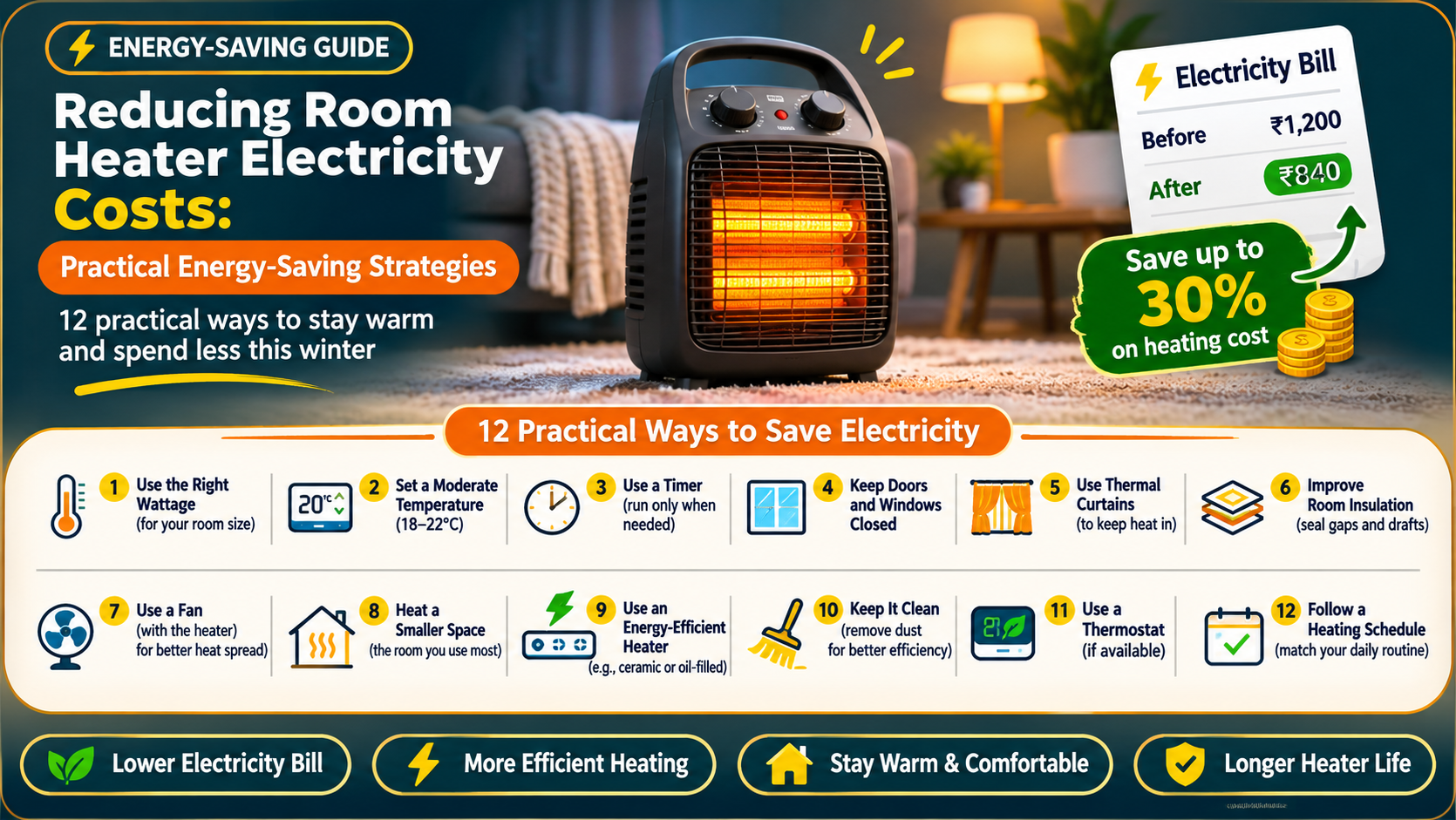
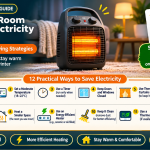
12 practical ways to reduce room heater electricity consumption
- Heat only the room you are using. Heating one occupied room is far cheaper than heating the whole home.
- Keep doors and windows closed so the warm air stays where you need it.
- Seal drafts around windows and doors with weatherstripping or draft excluders.
- Use a thermostat and set it to a comfortable level rather than the maximum. Lowering it by one degree can noticeably cut running time.
- Use a timer to warm the room shortly before you need it, and to switch the heater off automatically afterwards.
- Choose the right size. Match the wattage to the room using the guide above.
- Close curtains at night to reduce heat loss through glass. Thick or thermal curtains help most.
- Use rugs on bare floors. Hard floors feel cold and draw heat out of the room.
- Dress for the season. A sweater, socks and a blanket let you set the heater lower.
- Place the heater sensibly. Keep it clear of furniture and curtains, and use infrared models when you sit in one place.
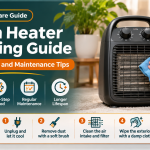
- Keep the heater clean. Dust on the element, grille or filter can reduce performance and cause odors.
- Do not leave it running in an empty room. Switch it off when you leave. It is cheaper and safer.
Circuit load and safety
A 1,500 W heater draws about 12.5 amps on a 120 V supply, or around 6.5 amps on a 230 V supply. On a 120 V circuit, that is a large share of a standard 15 amp circuit, so other high-power appliances on the same circuit may cause a breaker to trip.
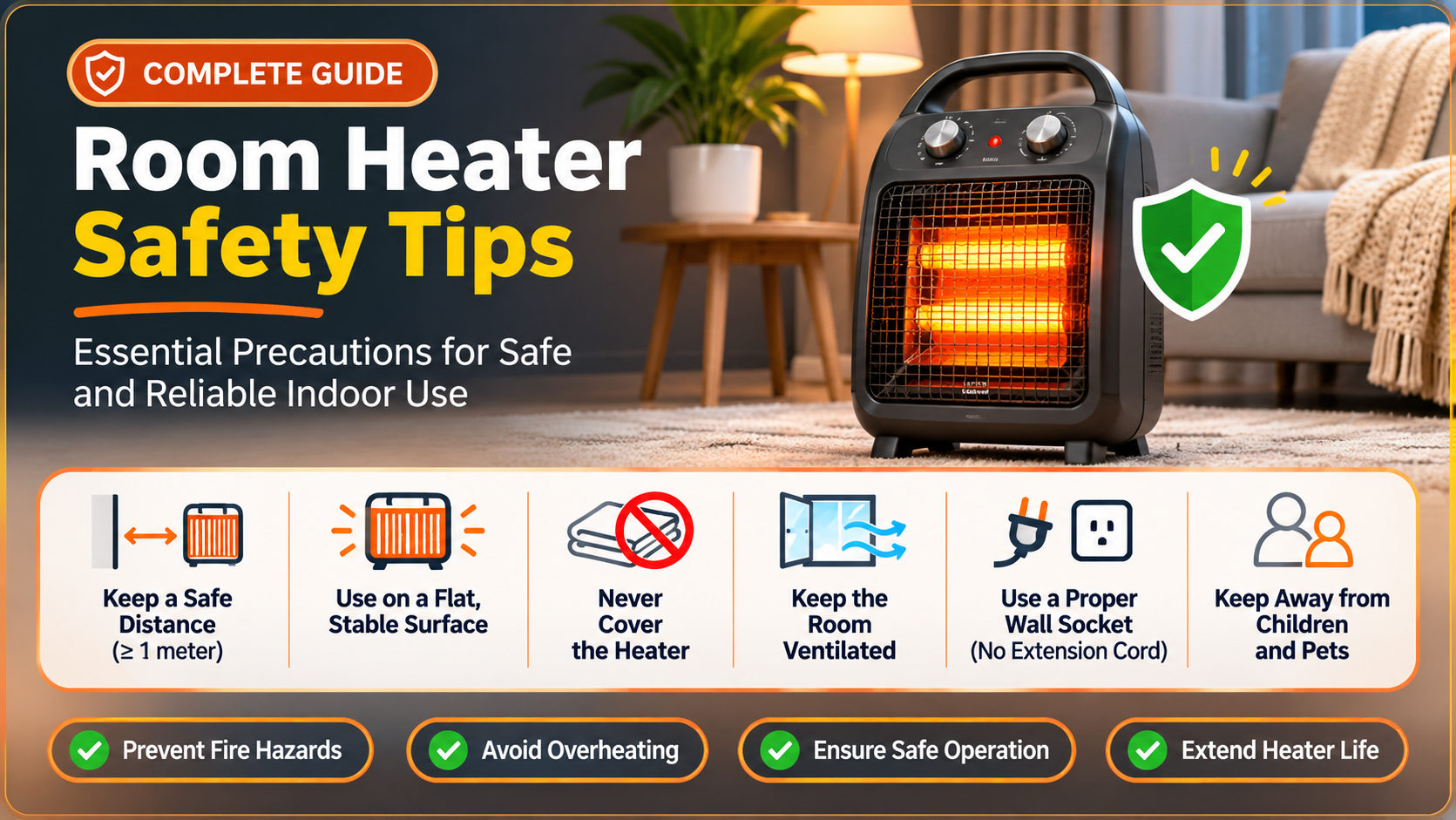
- Plug the heater directly into a wall socket. Avoid extension cords and power strips unless they are specifically rated for the heater’s load.
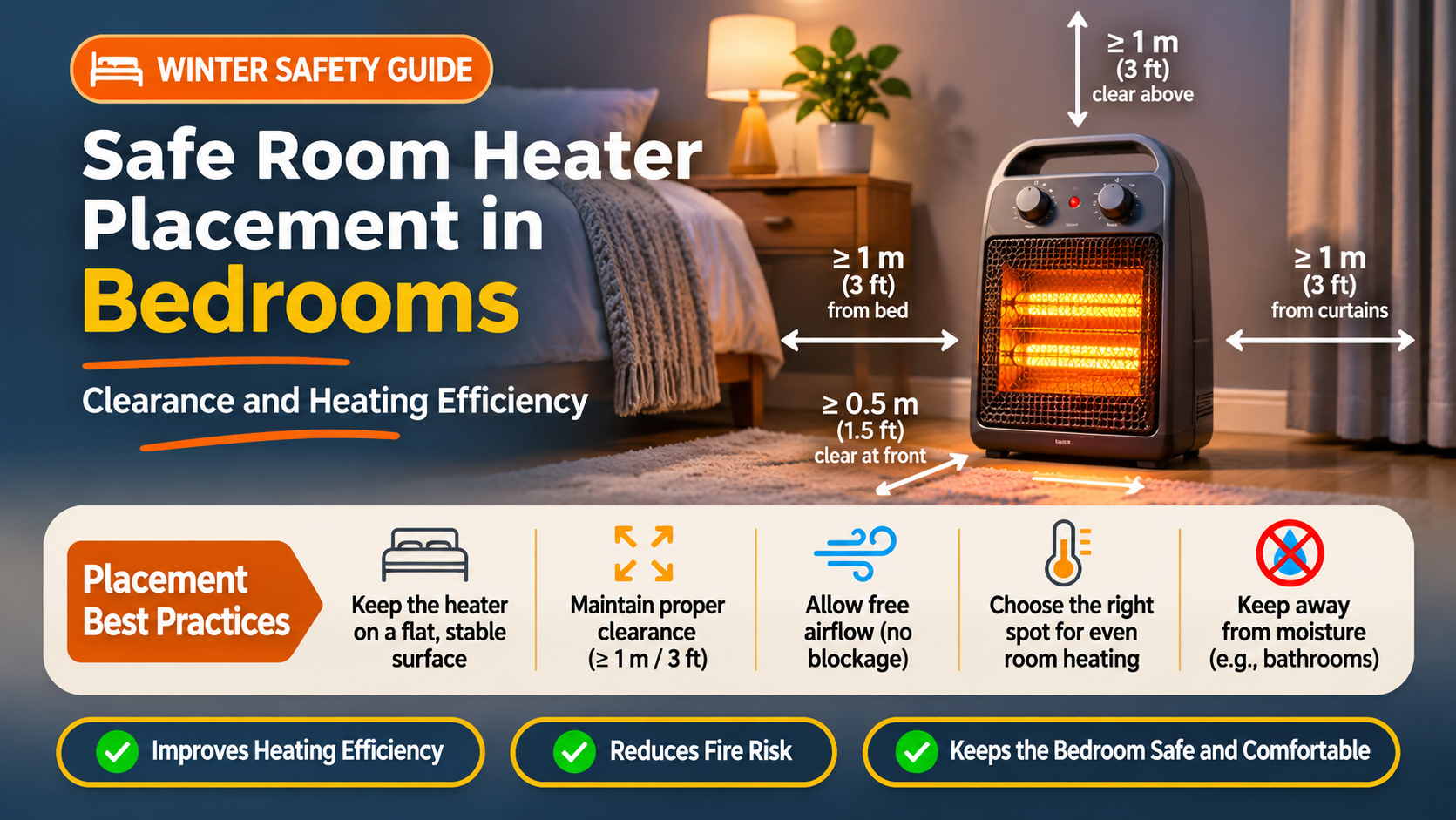
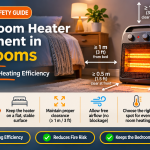
- Keep at least one metre (about three feet) of clear space around the heater, away from curtains, bedding, paper and furniture.
- Choose a heater with tip-over protection and overheat protection, and check the cord and plug regularly for damage or discoloration.
- Never cover a heater or use it to dry clothes, and do not leave it running while no one is home.
Frequently asked questions
Does a room heater use a lot of electricity?
Compared with most household appliances, yes. A 1,500 W heater uses as much power as about 15 traditional 100 W light bulbs running together. The cost depends on how long you run it and on your electricity price.
How much does it cost to run a room heater for 24 hours?
A 1,500 W heater running at full power for 24 hours uses 36 kWh. At an example rate of $0.16 per kWh, that is about $5.76. In practice it is usually lower, because the thermostat switches the heater off once the room is warm.
How many units does a 1,500 W heater use in one hour?
One hour at full power uses 1.5 units (1.5 kWh) of electricity.
Do oil-filled heaters use less electricity than other heaters?
Not for the same wattage. Oil-filled heaters cycle on and off and hold heat for a while after the element switches off, so they may feel more economical for long, steady use, but the electricity required to produce a given amount of heat is the same.
Is it cheaper to leave the heater on all day or turn it on and off?
For a portable heater, it is usually cheaper to run it only when and where you need warmth. A heater that runs all day replaces heat that keeps escaping from the room. A timer or smart plug can warm the room just before you arrive.
Can a room heater run on an inverter or a generator?
Only if the inverter or generator can supply more than the heater’s wattage continuously, and a margin is wise. A 1,500 W heater needs a supply rated well above 1,500 W. Always check the manufacturer’s guidance for the equipment you are using.
Final thoughts
Room heater electricity consumption comes down to a simple calculation: watts times hours, divided by 1,000, times your price per unit. A typical 1,500 W heater uses 1.5 kWh for every hour at full power, which is manageable for a few hours a day but adds up quickly if it runs from morning until night.
Pick a size that suits the room, use the thermostat and timer, keep the heat in with simple draft-proofing, and warm only the space you are using. Do that, and you can stay comfortable all winter without an unwelcome surprise on your electricity bill.