When the temperature drops, most of us start looking for a quick and affordable way to stay warm without raising the whole-house heating bill. Two options come up again and again: the Handy Heater Turbo, a tiny heater that plugs straight into a wall outlet, and the traditional portable space heater that sits on the floor or a table. They both turn electricity into heat, yet they are built for very different jobs.
In this guide, we compare the Handy Heater Turbo vs space heater on heat output, room coverage, running cost, safety, noise, convenience and value, so you can decide which one deserves a place in your home or office.
Choose the Handy Heater Turbo if you want a cheap, quiet, space-saving heater for a small bedroom, bathroom, desk or workspace. Choose a standard space heater if you need stronger heat for a larger or poorly insulated room.
Table of Contents
- What Is the Handy Heater Turbo?
- What Is a Regular Space Heater?
- Handy Heater Turbo vs Space Heater: Quick Comparison Table
- Heat Output and Room Coverage
- Running Cost and Energy Use
- Safety Features
- Noise, Design and Convenience
- Pros and Cons of Each
- Which One Should You Buy?
- Tips for Using Any Electric Heater Safely
- Frequently Asked Questions
- Final Verdict
1. What Is the Handy Heater Turbo?
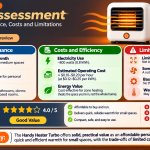
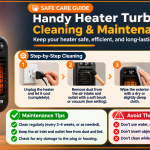
The Handy Heater Turbo (often sold as the Handy Heater Turbo 800) is a compact personal heater that plugs directly into a standard wall outlet. Because the unit sits flush against the wall, it needs no floor space and has no long cord to trip over.
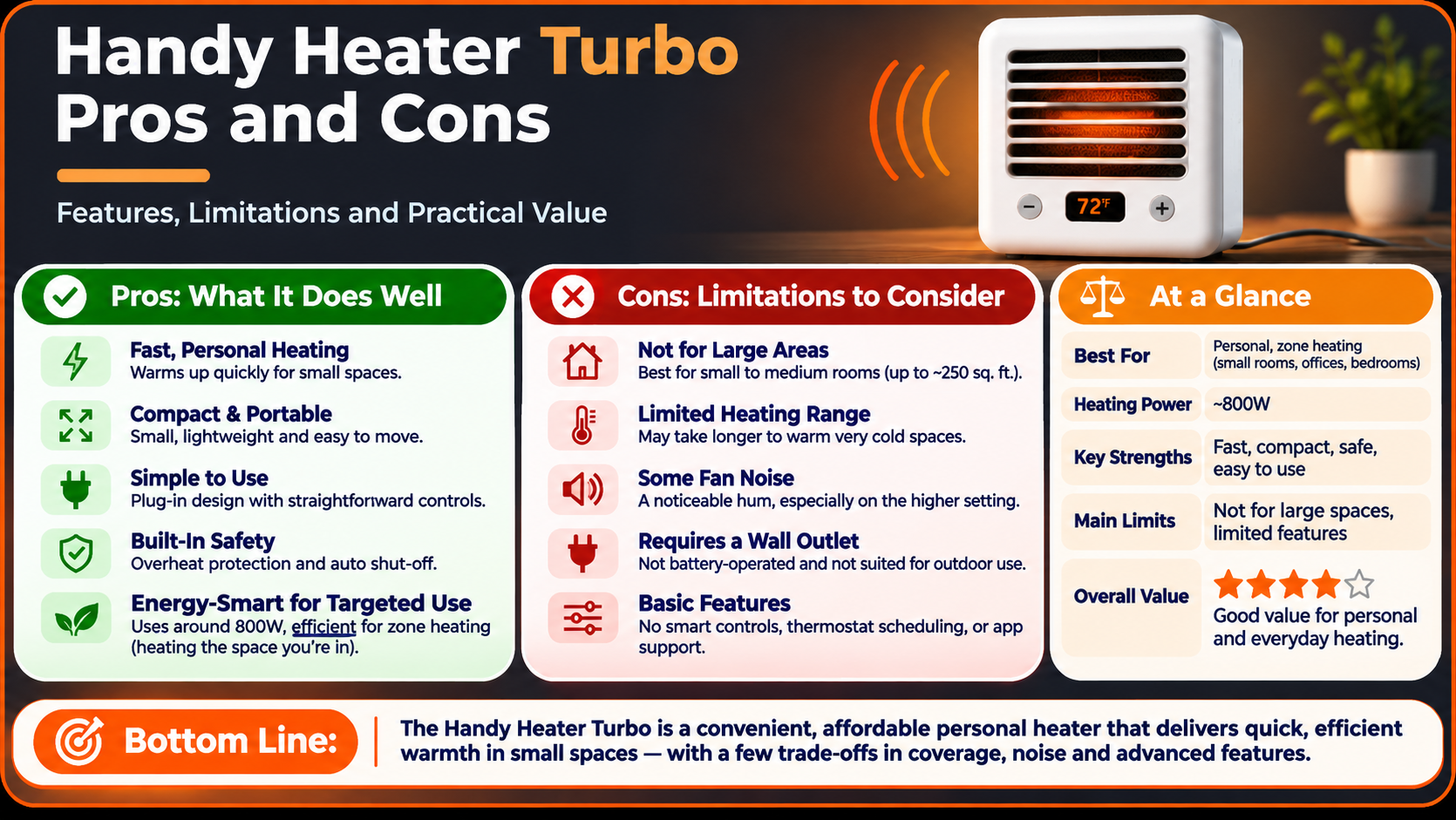
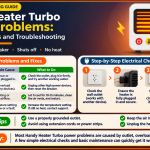
Most listings describe it as an 800-watt ceramic heater that runs at 120 volts. It uses ceramic PTC heating technology, a digital LED display, an adjustable thermostat (roughly 60°F to 90°F) and a programmable timer that can run up to 12 hours. It also advertises a stay-cool housing and automatic shut-off for added safety.
2. What Is a Regular Space Heater?
A space heater is a portable electric heater that you place on the floor, a table or a shelf and plug in with a power cord. Most full-size models run at 1,500 watts, which is the maximum that a standard household circuit is designed to handle comfortably for a single appliance.
Common types include ceramic fan heaters, oil-filled radiator heaters, infrared heaters and tower heaters. Many include oscillation, multiple heat settings, remote controls, tip-over protection and overheat protection.
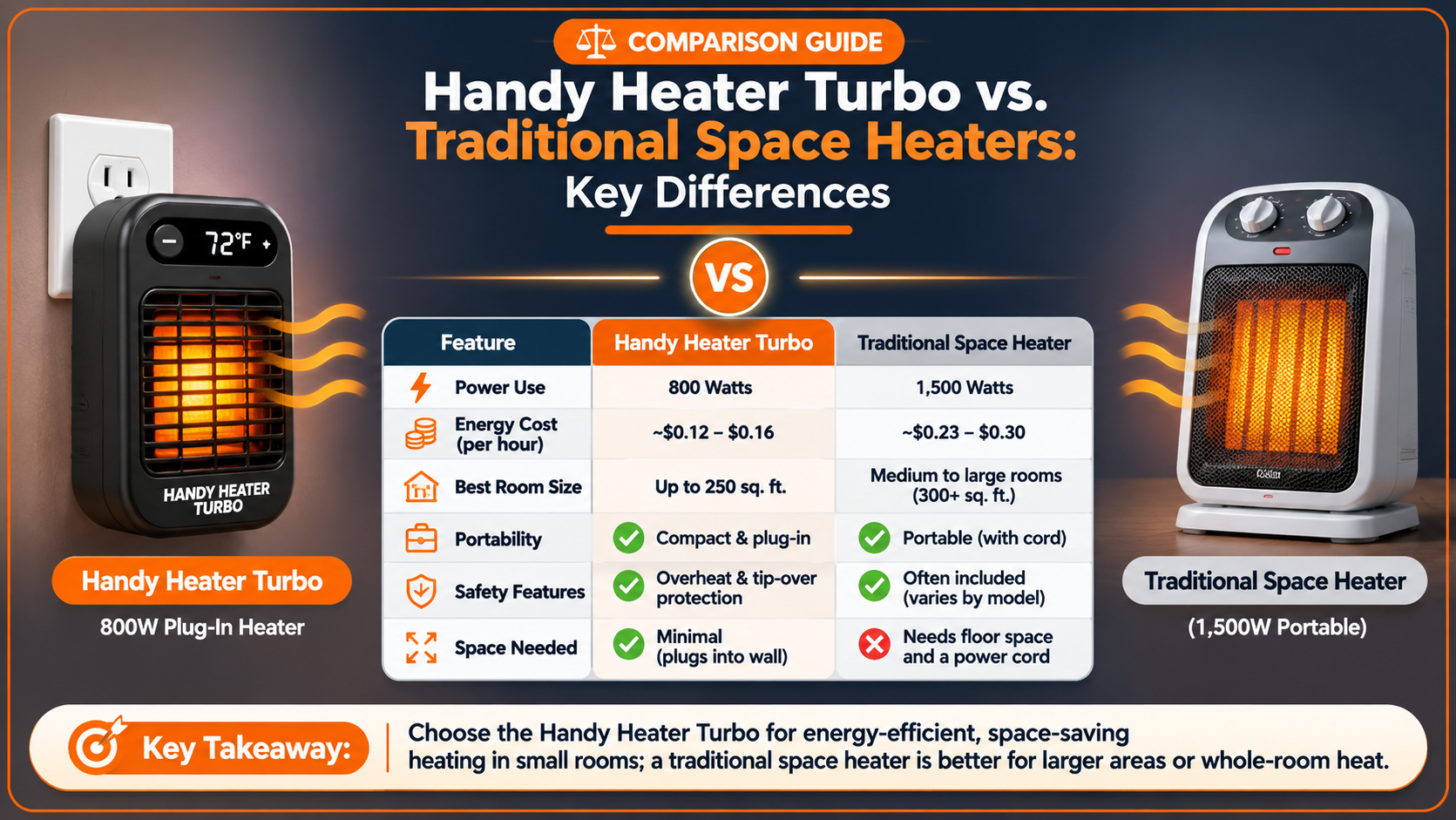
3. Handy Heater Turbo vs Space Heater: Quick Comparison Table
| Feature | Handy Heater Turbo | Typical Space Heater |
|---|---|---|
| Power | About 800 watts | Usually 1,500 watts |
| Heat output | Around 2,700 BTU/hr | Around 5,100 BTU/hr |
| Best room size | Small rooms and personal zones | Small to medium rooms |
| Placement | Plugs directly into the wall outlet | Floor or table, uses a cord |
| Thermostat | Yes, digital (about 60°F to 90°F) | Varies by model |
| Timer | Up to 12 hours | Varies by model |
| Noise | Quiet operation | Quiet to moderate (fan models are louder) |
| Portability | Move it to any outlet | Carry handle on most models |
| Typical price | Around $25 to $30 | Around $30 to $100+ |
| Floor space needed | None | Yes |
4. Heat Output and Room Coverage
Heat output is where the two heaters differ the most. Electric heaters convert almost all of their wattage into heat, and each watt produces roughly 3.41 BTU per hour. That means an 800-watt heater produces about 2,700 BTU, while a 1,500-watt heater produces about 5,100 BTU, nearly double.
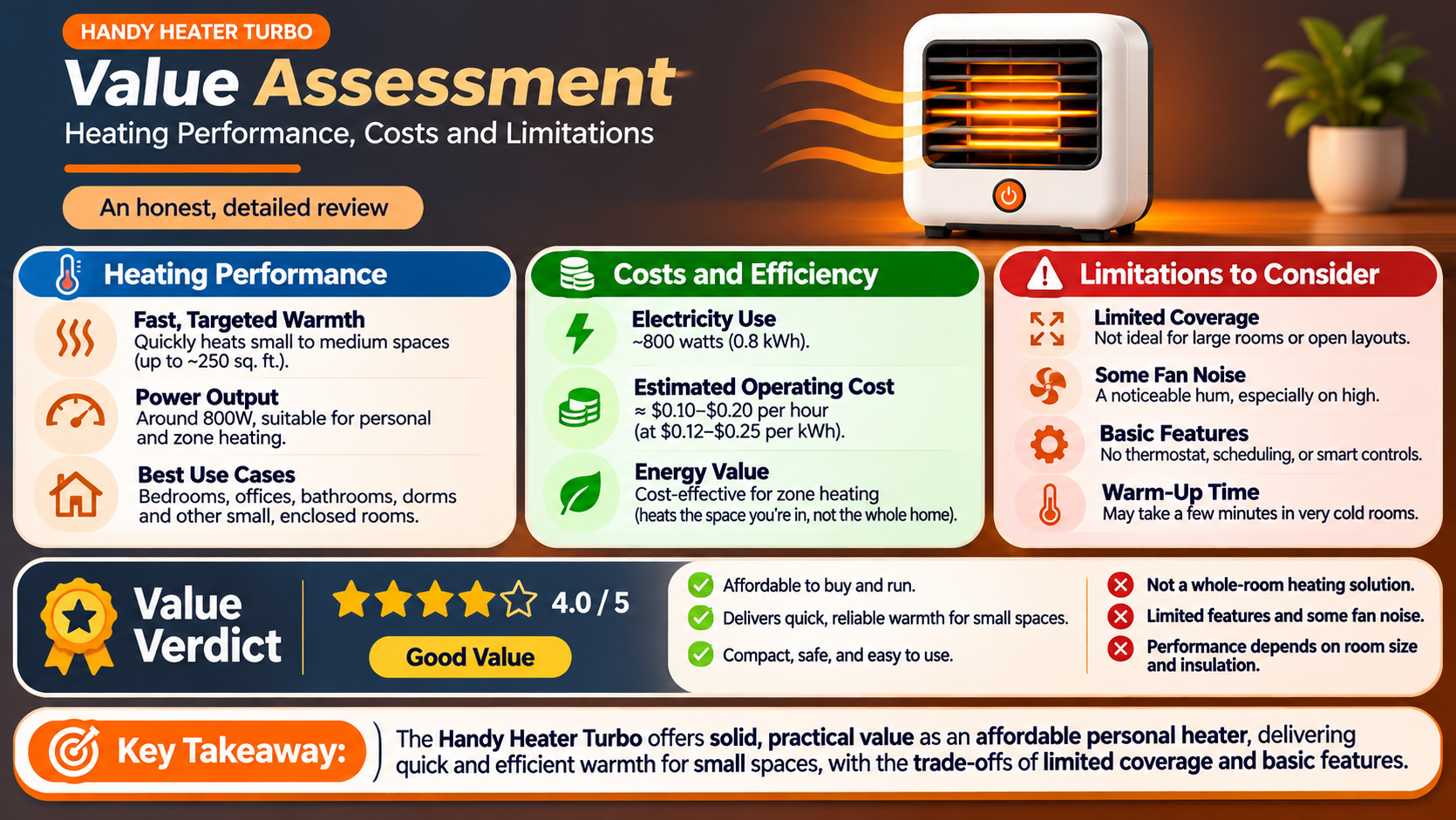
A common rule of thumb is that you need about 10 watts of heating power per square foot of floor space. By that rule, the Handy Heater Turbo is best for about 80 square feet and a 1,500-watt heater suits about 150 square feet. Some sellers claim the Turbo can warm up to 250 square feet, but that is best treated as an upper limit for a well-insulated room rather than a promise.
Where the Handy Heater Turbo works best
- Small bedrooms and kids’ rooms
- Bathrooms and laundry rooms
- Home offices and desk areas
- Cubicles, workbenches and garages used for short jobs
- Spot heating to take the chill off a single zone
Where a regular space heater works best
- Living rooms and larger bedrooms
- Basements and drafty rooms
- Spaces where you need fast, strong heat
- Rooms with high ceilings or poor insulation
5. Running Cost and Energy Use
Both heaters are close to 100% efficient at turning electricity into heat, so the cost per unit of heat is nearly the same. The real difference is how much power each one draws while it runs. Using an example electricity rate of $0.16 per kWh and 8 hours of use per day, here is what you might expect:
| Heater | Cost per hour | Cost per 8-hour day | Cost per 30 days |
|---|---|---|---|
| Handy Heater Turbo (800W) | About $0.13 | About $1.02 | About $30.72 |
| Standard space heater (1,500W) | About $0.24 | About $1.92 | About $57.60 |
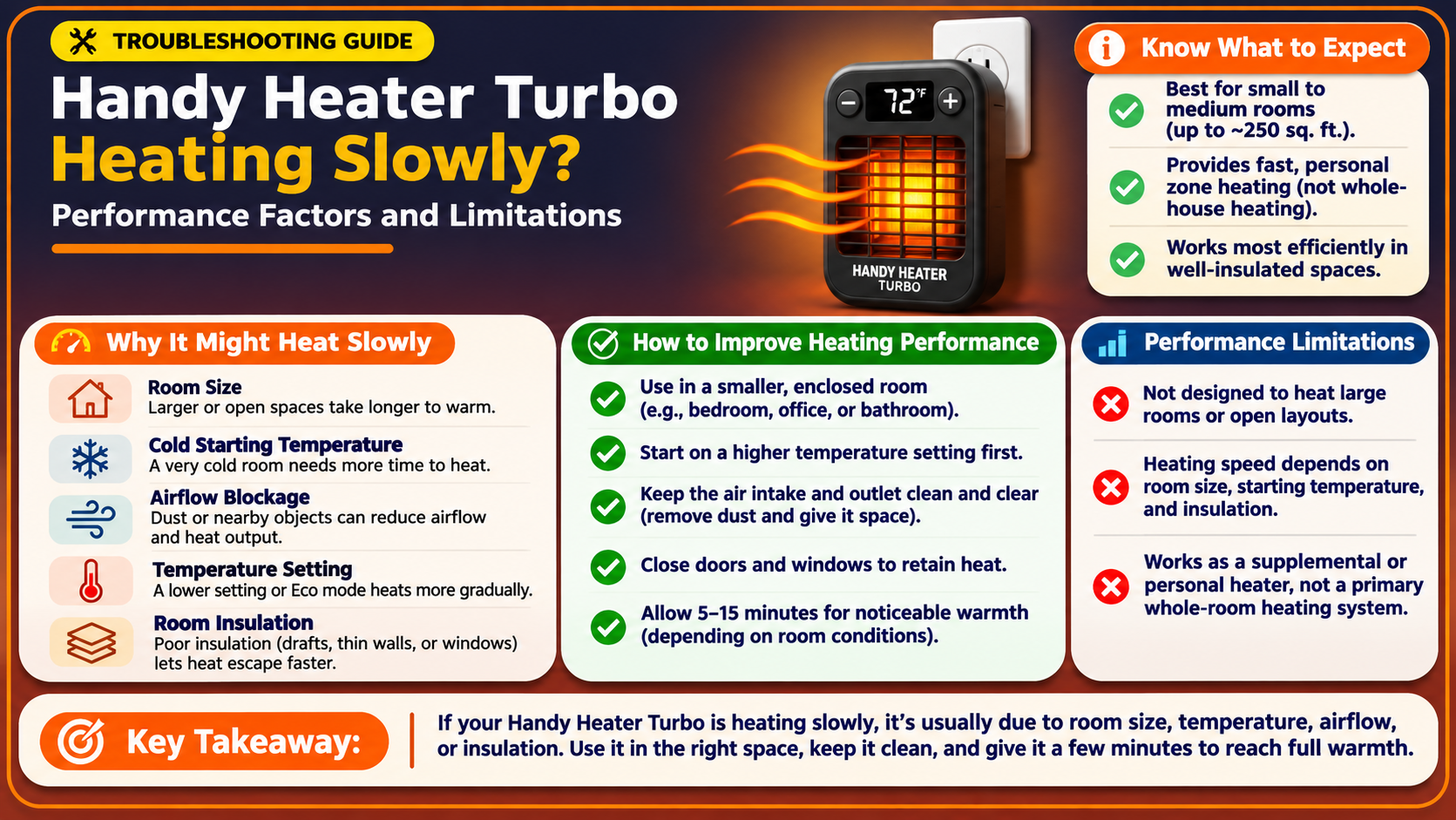
A smaller heater costs less per hour, but it also warms the room more slowly and may run for longer to reach the same temperature. In a small room, a thermostat-controlled Turbo can cycle off once the target temperature is reached, which keeps the bill down. In a large room, a low-wattage heater may run constantly without ever making the space truly comfortable.
Heat the person, not the whole house. Use a small heater in the room you actually occupy and lower the main thermostat a few degrees. This is where compact heaters give the best return.
6. Safety Features
Safety matters with any electric heater. The Handy Heater Turbo is marketed with a stay-cool housing, auto shut-off and a thermostat. Many listings also mention ETL certification. Standard space heaters typically add tip-over protection and overheat protection, and good models include both.
| Safety Feature | Handy Heater Turbo | Typical Space Heater |
|---|---|---|
| Auto shut-off / overheat protection | Yes | Yes, on most models |
| Tip-over switch | Not applicable (wall-mounted); some reviewers note it has none | Yes, on most good models |
| Cool-touch housing | Advertised | Varies by model |
| Long power cord | No cord to trip over | Yes, cord must be kept clear |
| Safety certification | ETL listed per retailer descriptions | Look for ETL or UL on the label |
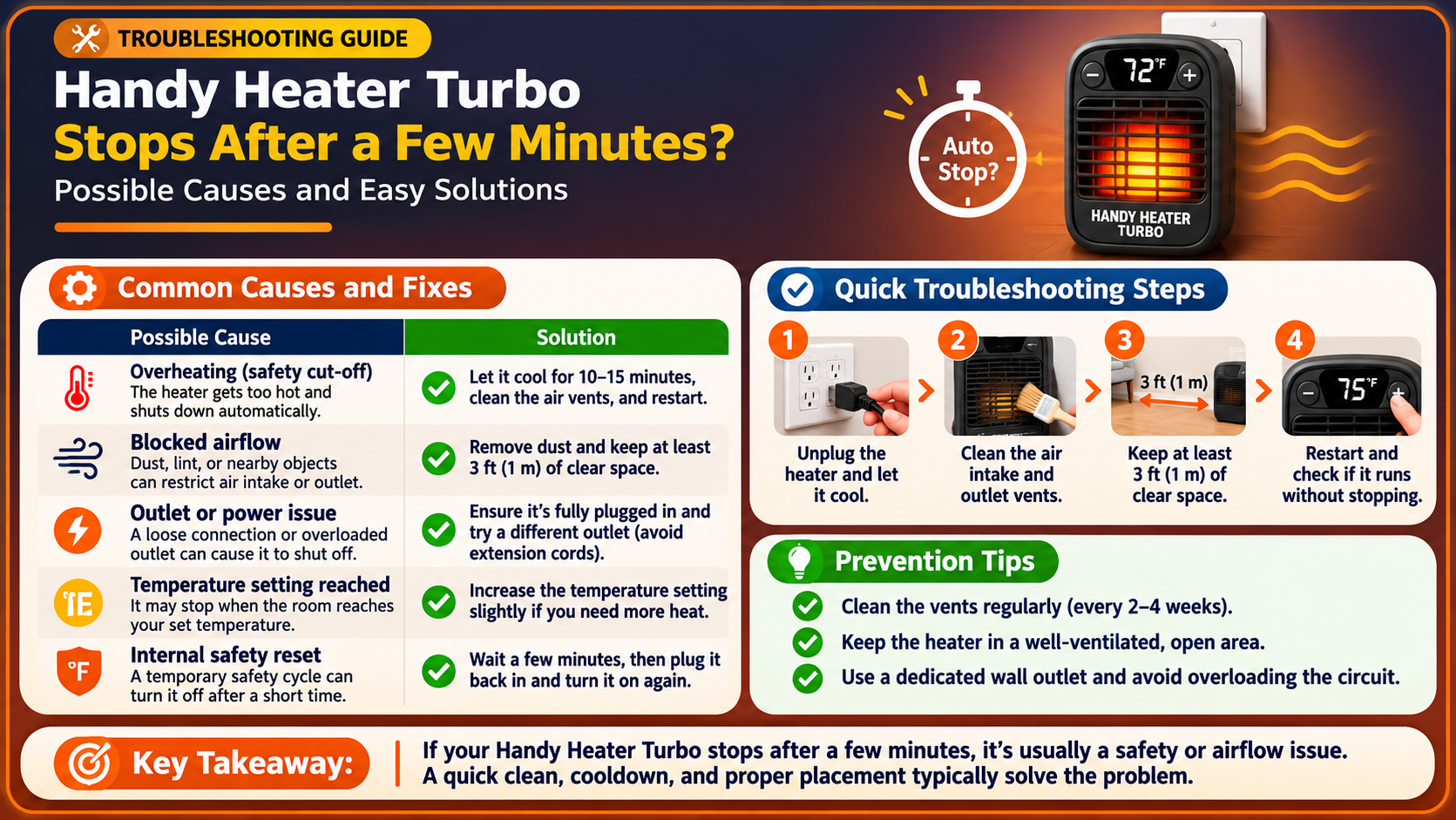
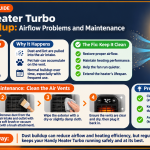
A wall-mounted heater removes the risk of someone kicking it over, which is a real advantage around pets and children. However, any heater that plugs directly into an outlet puts extra weight and heat on that outlet. Make sure the outlet is in good condition, the plug fits snugly and nothing is draped over or placed in front of the heater.
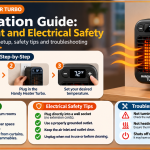
Never plug a heater into an extension cord or power strip. Keep curtains, bedding and furniture well away from the unit, and never leave any heater running unattended in a room where it could be covered or blocked.
7. Noise, Design and Convenience
The Handy Heater Turbo has no fan noise to speak of and its slim profile is easy to ignore, which makes it a good fit for bedrooms and offices. It also looks tidy because it sits against the wall and has no cord.
A larger space heater gives you more flexibility. You can position it where the heat is needed most, many models oscillate to spread warmth, and some include remote controls and several heat modes. The trade-off is that it uses floor space and needs a clear area around it.
One practical point about the Turbo: it needs a free outlet in a sensible position. If your outlet is behind a sofa or bed, or if you have only a single outlet in the room, a portable heater may be easier to place.
8. Pros and Cons of Each
Handy Heater Turbo
Pros
- Very affordable, usually around $30
- Saves floor space and removes cord clutter
- Digital thermostat and 12-hour programmable timer
- Quiet enough for sleeping and working
- Lower running cost per hour
- Easy to move between rooms
Cons
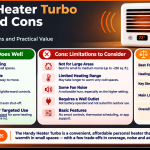
- Only 800 watts, so it is not suited to large rooms
- Needs a free, well-placed wall outlet
- Slower to warm a space than a 1,500-watt heater
- No oscillation or direction control
Regular Space Heater
Pros
- Roughly double the heat output
- Handles larger rooms and colder spaces
- Many styles to choose from: ceramic, oil-filled, infrared, tower
- Often includes tip-over protection, oscillation and a remote
- Can be placed exactly where you need heat
Cons
- Takes up floor space
- Higher running cost per hour
- Cord can be a trip hazard
- Fan models can be noisy
- Prices vary widely, and quality varies with price
9. Which One Should You Buy?
| Your Situation | Best Choice |
|---|---|
| Small bedroom or kid’s room | Handy Heater Turbo |
| Bathroom or laundry room | Handy Heater Turbo |
| Home office or cubicle | Handy Heater Turbo |
| Large living room | Standard space heater |
| Basement or drafty room | Standard space heater |
| Fast heat on a freezing morning | Standard space heater |
| Tight budget and small space | Handy Heater Turbo |
| Renters who want a tidy, floor-free setup | Handy Heater Turbo |
If you cannot decide, many people end up owning both: a compact wall-outlet heater for personal zones and a bigger space heater for the cold days when you need serious warmth.
10. Tips for Using Any Electric Heater Safely
- Plug the heater directly into a wall outlet and avoid extension cords and power strips.
- Keep at least three feet of clear space around portable heaters.
- Check the plug and outlet for discoloration, warmth or loose fit, and stop using the heater if you notice any.
- Do not use a heater to dry clothes or towels.
- Turn the heater off when you leave the room or go to sleep, unless the model is designed for it and the room is clear.
- Test your smoke alarms regularly during the heating season.
- Read the product manual and follow the manufacturer’s instructions.
11. Frequently Asked Questions
Is the Handy Heater Turbo better than a space heater?
It depends on the room. For a small room or personal zone, the Turbo is cheaper, quieter and tidier. For a larger room, a 1,500-watt space heater gives noticeably more heat.
How many watts does the Handy Heater Turbo use?
Most listings give it as 800 watts at 120 volts, which is well within what a standard household circuit can handle.
How big a room can the Handy Heater Turbo heat?
Sellers advertise up to about 250 square feet, but realistic results are best in smaller rooms of roughly 80 to 150 square feet, or as spot heating for a desk or bed area.
Is the Handy Heater Turbo cheaper to run?
Yes, per hour. At 800 watts it uses about half the electricity of a 1,500-watt heater, though it may have to run longer in a cold room.
Can I leave the Handy Heater Turbo on overnight?
It has a 12-hour timer, a thermostat and auto shut-off, but you should always follow the manufacturer’s instructions and keep the area around it clear. If you are unsure, use the timer and avoid running any heater unattended.
Can I use the Handy Heater Turbo with an extension cord?
No. Heaters should be plugged directly into a wall outlet and not into extension cords or power strips.
Is a ceramic heater better than other heater types?
Ceramic heaters warm up fast and are compact, which suits small rooms. Oil-filled heaters hold heat longer and are quiet, and infrared heaters warm people and objects directly. The right type depends on how you plan to use it.
Will either heater lower my heating bill?
Only if you use it to heat one occupied room while turning down your central heating. Heating a whole home with space heaters is rarely cost-effective.
Final Verdict: Handy Heater Turbo vs Space Heater
The Handy Heater Turbo is a smart little heater for the right job. It is inexpensive, quiet and easy to set up, and the thermostat and timer make it simple to control. For a small bedroom, bathroom or workspace it delivers handy, focused warmth without using any floor space.
A traditional space heater is the better pick when you need stronger heat, have a larger room, or want features such as oscillation and a remote. It costs more to run per hour, but it can warm a space the Turbo simply cannot.
Match the heater to the room size, buy a model with recognized safety certification, and always use it safely. Do that, and either option can keep you comfortable all winter.
Small space and small budget: Handy Heater Turbo.
Bigger room and faster heat: a 1,500-watt space heater.