
Cold fingers, a stiff neck and a thermostat you do not control: that is the daily reality in many offices during winter. If you have been searching for a handy heater turbo for office use, you are probably looking for a small, plug-in heater that warms your own space quickly without waiting for the building’s heating to catch up.
This guide explains what a handy heater turbo actually is, how it works, who it suits, what it really costs to run, and how to use it safely at work. You will also find a simple buying checklist and answers to the questions people ask most. The goal is to help you decide with clear facts, not marketing slogans.
Quick summary
- Best for: a single desk, a cubicle, a small private office or a home office.
- Not ideal for: large open-plan floors or drafty rooms with poor insulation.
- Typical technology: a fan-forced ceramic (PTC) heating element.
- Biggest risks: poor placement, extension cords and leaving it on unattended.
- Smart move: check the wattage, safety features and your office rules before you buy.
What Is a Handy Heater Turbo?
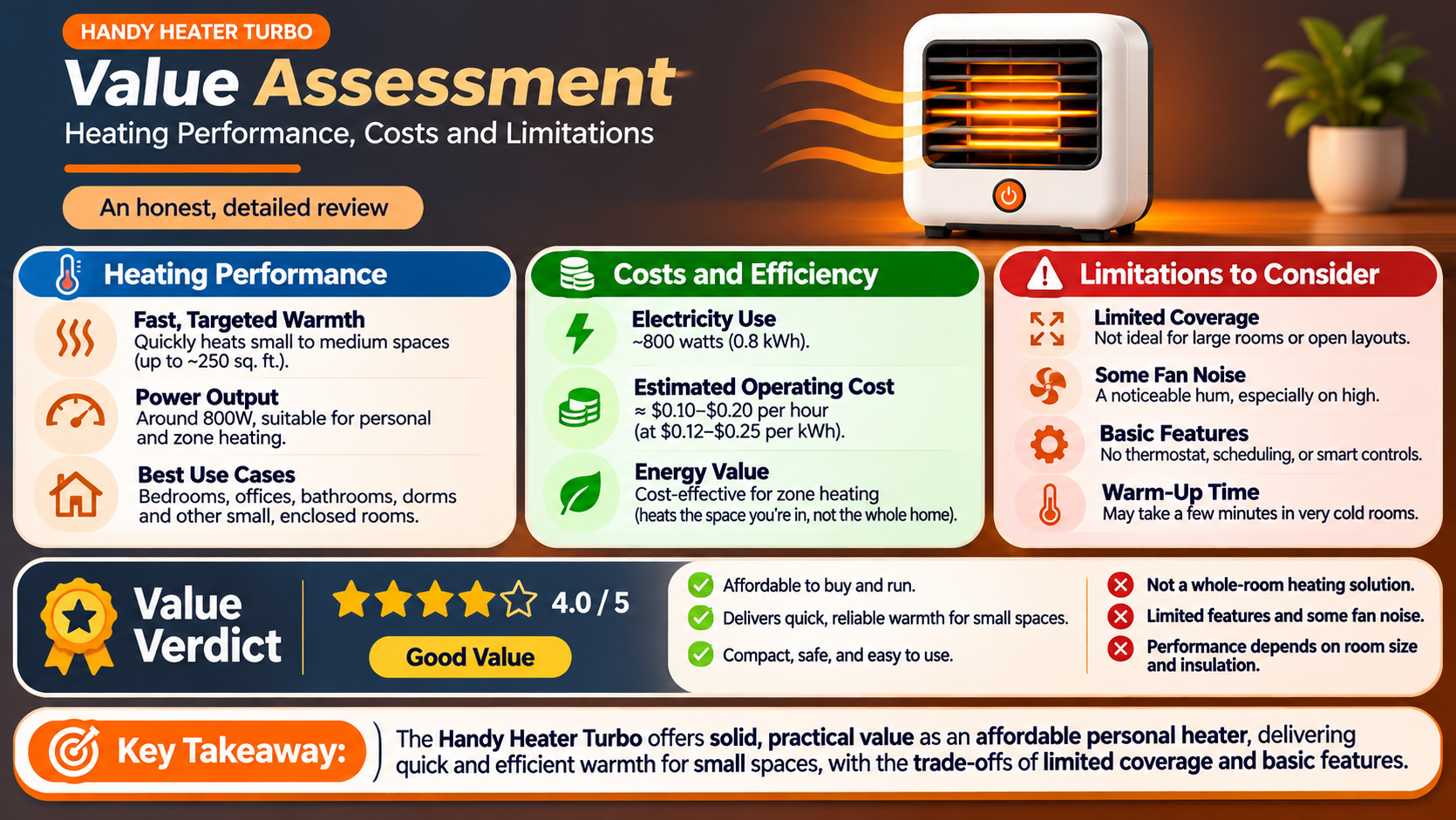
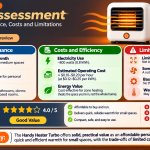
“Handy heater turbo” is a name used for compact, portable electric heaters that plug into a wall socket and blow warm air using a small fan. Most products sold under names like this are fan-forced ceramic heaters. They are small enough to sit on a desk or the floor beside it, and they are designed to warm the area right around you rather than an entire building.
The word “turbo” usually points to a high-speed fan or a boost heating mode. It is a marketing term, not a technical standard. That is why the real specifications on the product label matter more than the name on the box. Always check the rated power in watts, the voltage and the safety features before you decide.
Reality check on bold claims
Be careful with promises such as “heats a whole room in seconds” or “cuts your electricity bill”. A small heater can make the air around you feel warmer quickly, but physics still applies: more heat needs more power. Judge any heater by its wattage, its safety certifications and honest user feedback, not by slogans.
How a Ceramic Fan Heater Works
The design is simple, which is part of its appeal. Inside the heater, a ceramic element (often called a PTC element) heats up when electricity passes through it. A small fan pulls cool air from the room across the hot element and pushes the warmed air out toward you. A PTC element also limits its own temperature as it heats, which is one reason this design is common in compact heaters.

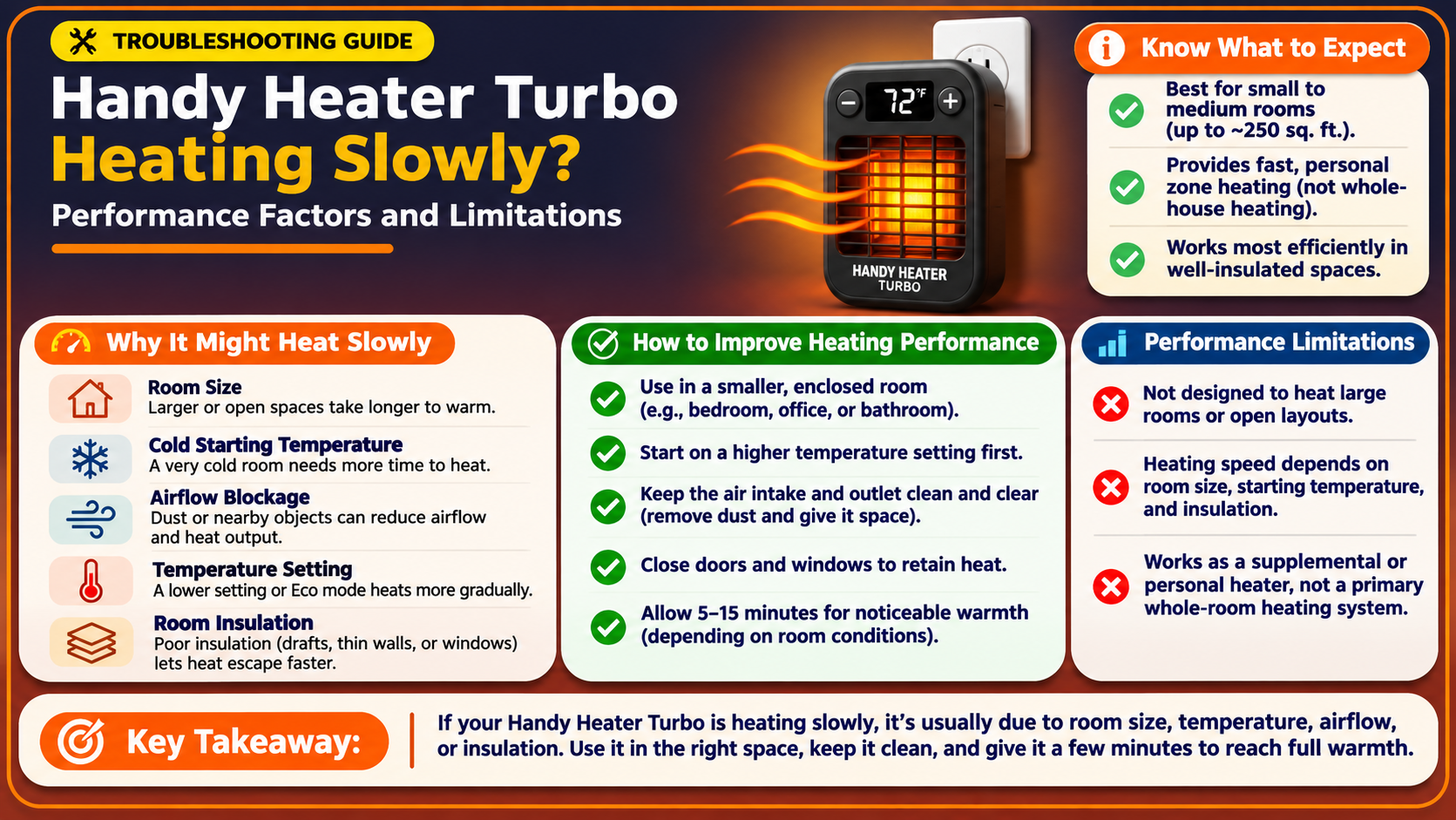
Because the heater warms moving air, you feel the effect quickly when you sit within its airflow. The trade-off is that the warmth is most noticeable close to the heater. Stand across a large room and the effect fades fast.
Who Should Use a Handy Heater Turbo in the Office?
A compact heater is a good match when you need personal comfort in a small area. It tends to work well for:
- Cubicle workers who sit in the same spot all day and feel cold air from vents or windows.
- Small private offices where the main heating is weak or switched off in the evening.
- Home offices where heating the whole house just for one desk would be wasteful.
- Shops, reception desks and workshops where a person stays in one place.
It is a weaker choice for big shared spaces. If you work in a large open-plan area, a small heater will only warm the person beside it, and it may annoy colleagues with fan noise or heat directed at them.
Key Features to Look For
Not every compact heater is built the same. When you compare options, these features make the biggest difference to comfort and safety.
1. Wattage (Heating Power)
Wattage tells you how much electrical power the heater uses and roughly how much heat it can produce. Many compact desk heaters are lower wattage, while larger portable fan heaters often go up to around 1500W. A common rule of thumb is about 10 watts per square foot of floor area to heat a whole room, so a small desk unit is meant for personal warmth, not for heating a big space.
2. Tip-Over Protection
This feature switches the heater off automatically if it is knocked over. In a busy office with cables, bags and chairs, it is one of the most valuable safety features you can have.
3. Overheat Protection
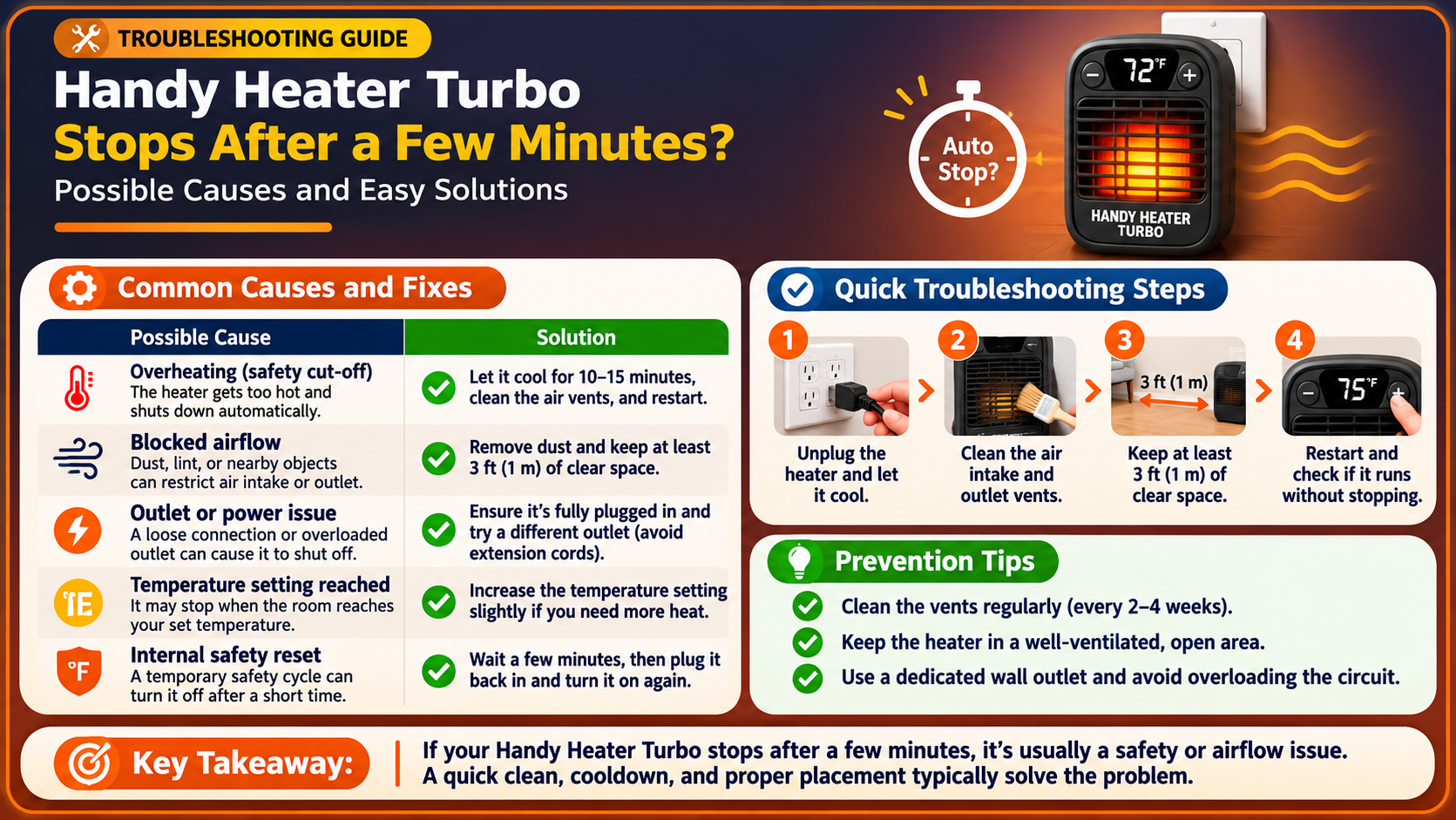
An overheat cut-out turns the heater off if its internal temperature rises too high, for example when the airflow is blocked. Never buy a heater that does not clearly list this protection.
4. Adjustable Thermostat or Heat Settings
A thermostat or at least two heat levels lets you avoid overheating your space and saves power once the area is comfortable. A single-setting heater keeps running at full output, which costs more and can make you feel stuffy.
5. Noise Level
Because it uses a fan, a ceramic heater makes some noise. In a quiet office, check the noise rating if the seller lists one, and read user comments about fan sound. A steady hum is easy to ignore; a rattling or whining fan is not.
6. Safety Certification and Build Quality
Look for a recognized safety mark that applies in your country, such as UL, ETL, CE or your national standard, along with a flame-resistant housing and a cool-touch exterior. An unbranded heater with no markings and no manual is a gamble you do not need to take with an electrical appliance.
7. Plug, Cord and Size
Check that the plug fits your sockets properly and that the cable is long enough to reach the wall without an extension. A compact, stable base and a carry handle also make it easier to move and store.
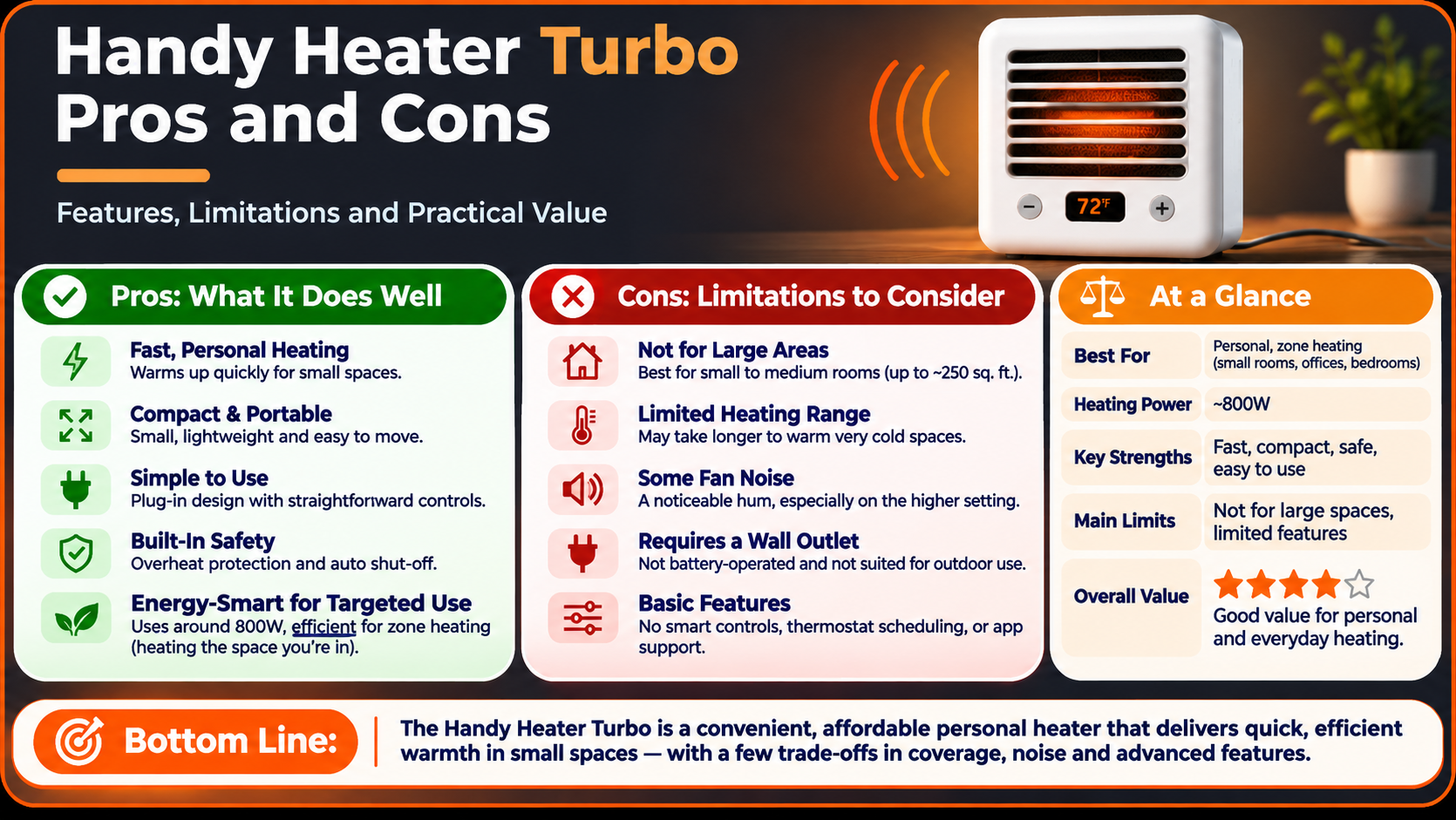
Pros and Cons of a Compact Fan Heater
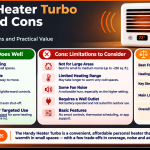
| Advantages | Limitations |
|---|---|
| Warms the area around you within moments | Heats mainly the space close to the heater |
| Small, light and easy to move or store | Not suited to large or open-plan rooms |
| Usually affordable compared with larger heaters | Fan produces some noise |
| Plug in and use with no installation | Heat stops soon after you switch it off |
| Handy for personal comfort when the building is cold | Can dry the air and feel stuffy if overused |
Safety First: How to Use a Heater at Your Desk
Portable electric heaters are one of the common causes of office and home fires when they are misused, so safe habits matter more than any feature list. Follow these rules every time.

- Plug directly into a wall outlet. Heaters draw a lot of current. Extension cords and power strips can overheat unless they are specifically rated for the load.
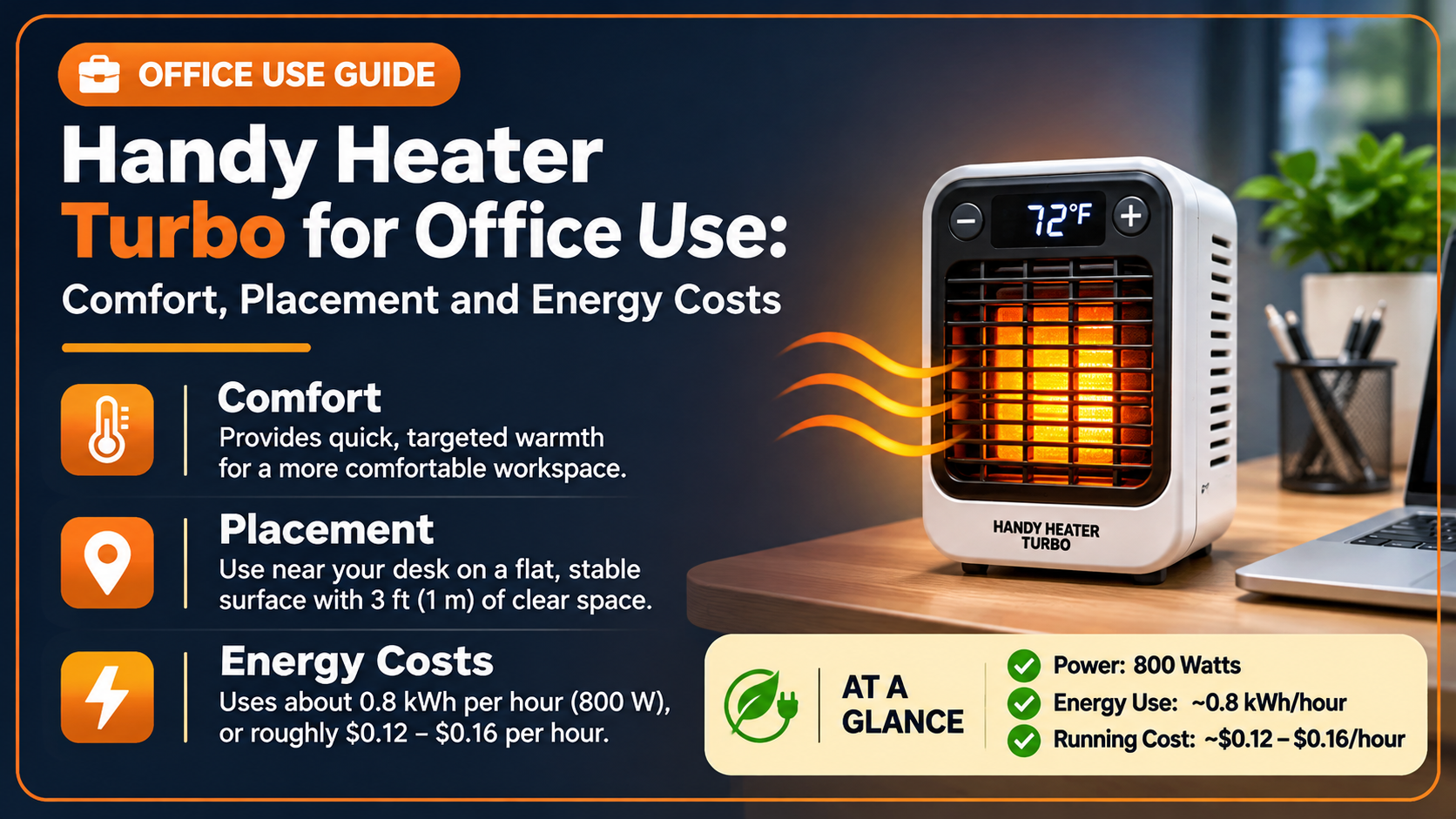
- Keep about 3 feet (1 metre) of clear space around the heater. Papers, curtains, cardboard, bags and clothes should stay well away.
- Use a flat, hard, stable surface. Do not place it on a soft chair, a stack of paper or an uneven shelf.
- Never leave it running unattended. Switch it off and unplug it when you leave your desk or finish for the day.
- Do not cover the heater or use it to dry wet clothes, gloves or shoes.
- Check the cord and plug regularly. If either feels very hot or looks damaged, stop using the heater.
- Ask first. Some workplaces restrict personal heaters. Check with your manager or facilities team before you bring one in.
Know your electrical load
Current in amps is power in watts divided by voltage. A 1500W heater draws roughly 12.5 amps on a 120V supply and about 6.5 amps on a 230V supply. On a 120V circuit that is most of a standard 15-amp circuit, so avoid running it alongside other high-power devices on the same circuit.
How Much Does It Cost to Run?
Running cost is the question most buyers forget to ask. The formula is easy: divide the wattage by 1000 to get kilowatts, multiply by the hours you use it, then multiply by your electricity price per kilowatt-hour (kWh).

In the example above, a 1500W heater running flat out for 8 hours uses 12 kWh. At an example price of $0.15 per kWh, that is about $1.80 for the day. Your real cost depends on your local electricity rate. Because a thermostat switches the heater on and off to hold the temperature, actual use is often lower than the maximum.
Want to keep the bill down? Use the lowest setting that keeps you comfortable, heat only while you are at your desk, and combine the heater with warm clothing rather than relying on it alone.
Handy Heater vs Other Office Heater Types
A fan heater is not the only option. This comparison shows where each type fits best.
| Heater Type | Warm-Up Speed | Noise | Best For |
|---|---|---|---|
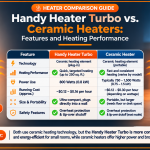
| Ceramic fan heater (handy heater style) | Very fast | Fan noise | Quick personal warmth at a desk |
| Oil-filled radiator | Slow | Almost silent | Steady heat in a small closed room |
| Infrared or radiant panel | Fast on contact | Silent | Warming legs and feet under a desk |
| Convection panel heater | Moderate | Quiet | Background warmth in a small office |
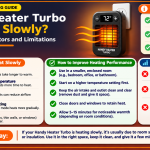
Tips to Get the Best Results
- Position it at an angle toward your legs or torso, not directly at your face.
- Start on high, then turn it down once your area is warm to save energy.
- Close nearby doors and windows so the warmed air does not escape.
- Dress in layers. A heater and a light jacket together beat a heater alone.
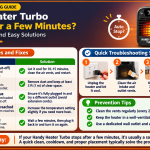
- Dust the grille regularly. Unplug the heater, let it cool and clean the vents gently so airflow stays strong.
- Be considerate. Point it away from coworkers and keep the fan setting low in quiet spaces.
Buying Checklist Before You Order
- Is the wattage clearly listed and suitable for the space you want to warm?
- Does it include tip-over and overheat protection?
- Does it carry a recognized safety certification for your country?
- Is there a thermostat or at least more than one heat setting?
- Is the noise level acceptable for your workplace?
- Is the cord long enough to reach the wall without an extension?
- Are there honest reviews from real buyers, and is there a clear return or warranty policy?
- Is a personal heater allowed in your office?
Common Mistakes to Avoid
- Buying by the name “turbo” alone without checking the wattage and safety features.
- Using a power strip or a thin extension cord because the wall socket is far away.
- Expecting it to heat a big room. A small heater is for personal space.
- Leaving it on while away from the desk or overnight.
- Blocking the airflow with papers, bags or a desk partition.
Frequently Asked Questions
Is a handy heater turbo good for a small office?
Yes, a compact fan heater suits a small private office or a single desk. For a larger room, you would need a higher-wattage heater, and even then it may struggle if the space is poorly insulated.
Can I leave it on all day?
It is best not to leave any portable heater running unattended. Switch it off and unplug it when you leave your desk, and always at the end of the day.
Can I plug it into an extension cord?
The safest choice is a direct wall outlet. If you must use an extension, it needs to be rated for the heater’s wattage, and you should confirm that the heater’s manual allows it. A standard power strip is not a good idea.
How many watts do I need?
For personal desk warmth, a lower-wattage unit can be enough. To warm a whole small room, the common rule of thumb is about 10 watts per square foot, so a 1500W heater suits a room of roughly 150 square feet if the space is reasonably insulated.
Does a heater make the air dry?
Warming air lowers its relative humidity, so the air can feel drier. Short sessions at a comfortable setting, plus a little ventilation, help avoid a stuffy feeling.
Is it noisy?
All fan heaters make some sound. Check any noise rating listed by the seller and read user reviews, especially if you work in a quiet space.
Do I need permission to use one at work?
Many workplaces have rules about personal electrical appliances. Ask your manager or facilities team first so you do not break a policy or overload a circuit.
Final Verdict
A handy heater turbo for office use can be a practical, low-cost way to stay comfortable when your workspace is cold. It works best as a personal heater for one person in a small area, and it delivers the most value when you choose a model with proper safety protection, clear wattage details and a recognized certification.
Use it sensibly: plug it into the wall, keep the area around it clear, switch it off when you are away and be realistic about what a small heater can do. Do that, and you can enjoy a warmer desk without taking on unnecessary risk or a surprise electricity bill.
Disclosure: This article is for general information only. If you buy a product through this site, we may earn a commission at no extra cost to you. Always follow the manufacturer’s instructions and your workplace safety rules.