
Handy Heater Turbo Thermostat Not Working? 7 Proven Fixes (2026 Guide)
It is a cold evening, you switch on your Handy Heater Turbo, turn the thermostat knob… and nothing happens. Or worse, the heater runs non-stop, clicks on and off, or blows cold air. If your Handy Heater Turbo thermostat is not working, you are not alone. This is one of the most common complaints with compact ceramic room heaters, and in most cases the fix is simple and free.
In this complete guide you will learn what the thermostat does, why it fails, how to fix it step by step, when to stop and replace the unit, and what to look for if you decide to buy a better heater.
Table of Contents
- What Is the Thermostat in a Handy Heater Turbo?
- Common Symptoms of a Faulty Thermostat
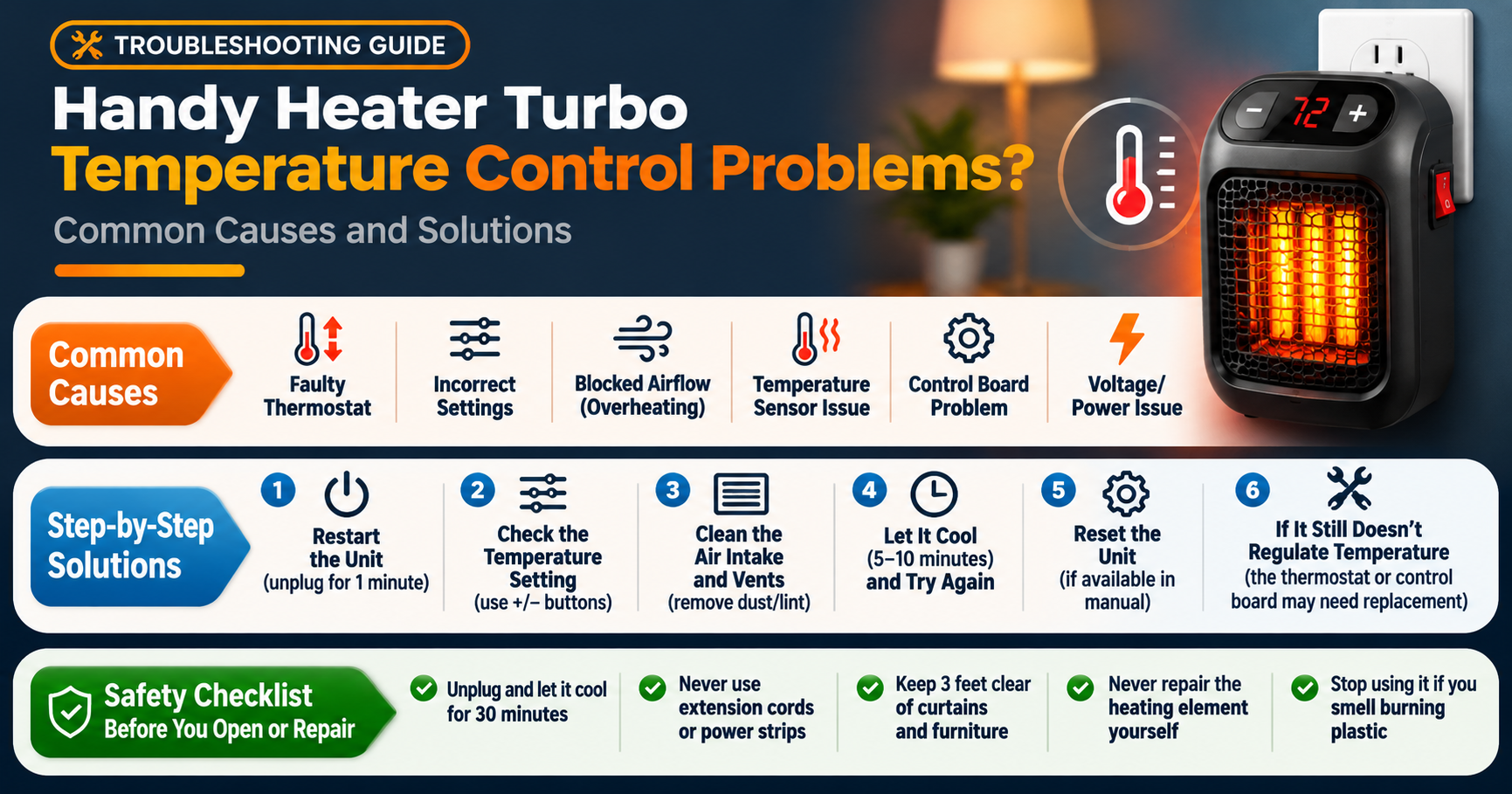
- Main Causes
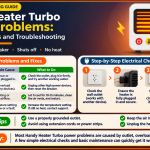
- 7 Step-by-Step Fixes
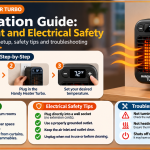
- Safety Checklist
- When to Replace the Heater
- How to Choose a Better Portable Heater
- Maintenance Tips
- FAQs
- Final Verdict
What Is the Thermostat in a Handy Heater Turbo?
The thermostat is the small sensor and switch that controls the room temperature. When the air reaches your chosen setting, it cuts power to the heating element. When the room cools, it switches the element back on. In a compact heater this is usually a simple bimetallic strip or a small electronic sensor connected to the temperature knob. Because it is a small mechanical part that works close to the heat, it can wear out, collect dust, or lose calibration.
Common Symptoms of a Thermostat Problem
- Heater does not turn on at all, even though the power light is on
- Heater runs constantly and never shuts off at the set temperature
- Heater switches on and off every few seconds (short cycling)
- Fan runs but the air stays cold
- Temperature knob feels loose, stuck, or has no click
- Room never reaches the temperature you set
Main Causes of Thermostat Failure
1. Dust and Lint Buildup
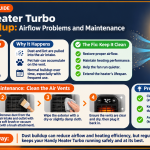
Dust blocks airflow and insulates the sensor, giving false readings. This is the number one cause.
2. Overheat Protection Triggered
Most heaters have a safety cut-off. If vents are blocked, the heater shuts down and may seem broken.
3. Power Supply Problems
Loose plugs, damaged sockets, overloaded extension cords, or voltage drops can stop the heater from starting.
4. Misplaced Heater
If the heater sits right next to a wall, sofa, or window, the sensor reads the wrong temperature and the unit behaves oddly.
5. Worn or Faulty Sensor
After long use, the internal sensor or switch can fail permanently and needs replacement.
6. Loose Internal Connection
Vibration and repeated heating cycles can loosen wires inside the unit.
7. Manufacturing Defect or Age
Low-cost heaters often have short-lived thermostats, especially with daily heavy use.

7 Step-by-Step Fixes
Fix 1: Check the Power Source
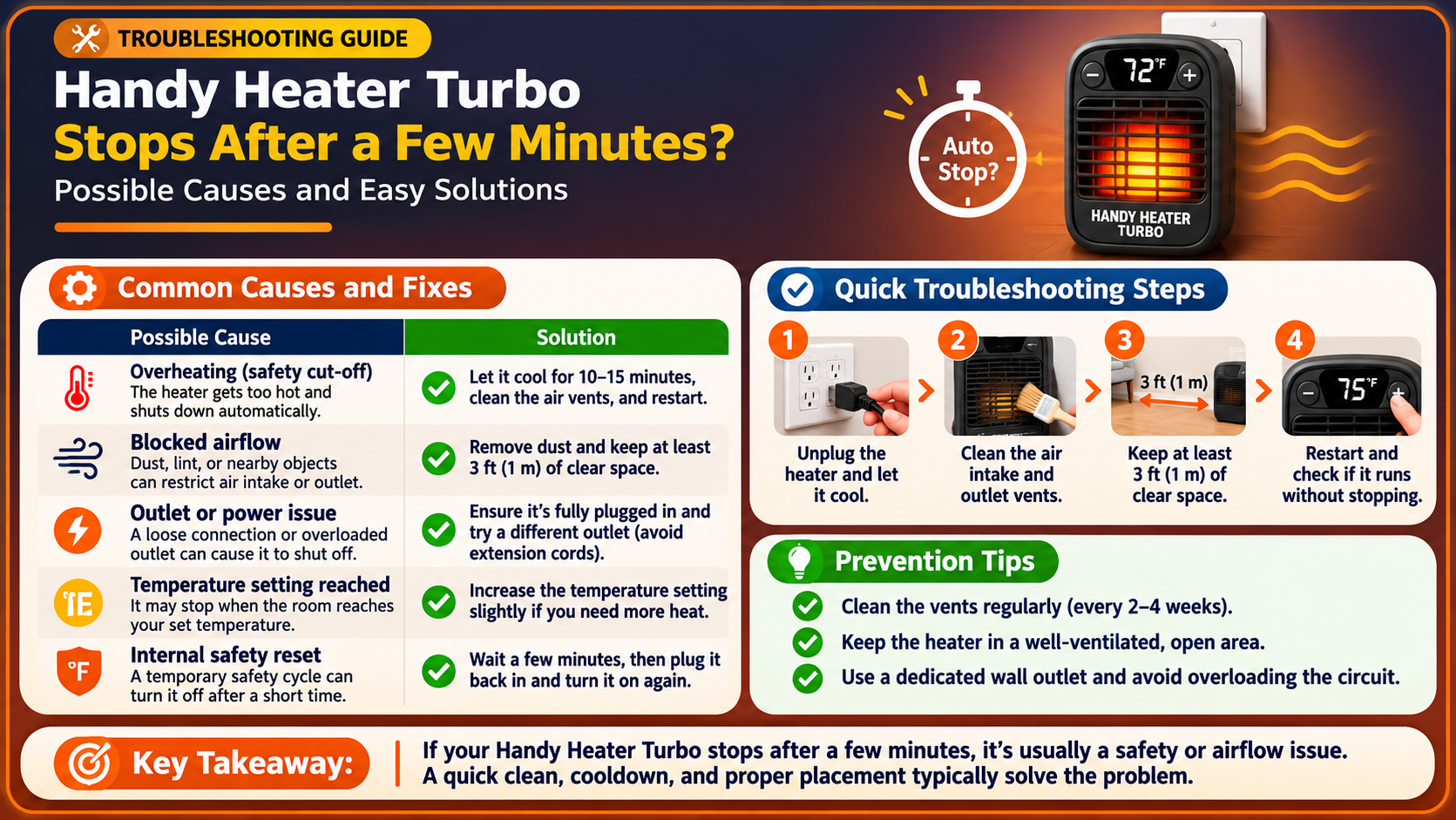
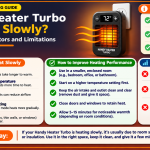
Plug the heater directly into a wall socket. Avoid extension cords and power strips because heaters draw high current. Test the socket with a lamp or phone charger. Check the plug for discoloration or a loose fit.
Fix 2: Reset the Heater
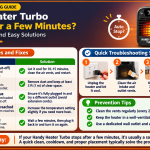
Turn the heater off, unplug it, and wait at least 15 to 30 minutes. This lets the overheat protection reset. Plug it back in and set the thermostat to maximum first, then to your preferred level.
Fix 3: Turn the Thermostat Knob Properly
Rotate the knob fully to the highest setting, then back down slowly. If you do not hear or feel a click, the switch may be stuck or worn. Gently turning it back and forth a few times can free light dust or stiffness.
Fix 4: Clean the Vents and Sensor Area
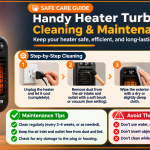
With the heater unplugged and cool, use a soft brush or a vacuum with a brush attachment to clean the front grille, rear vents, and the area around the sensor. Use compressed air if you have it. Never use water or sprays inside the heater.
Fix 5: Change the Heater Position
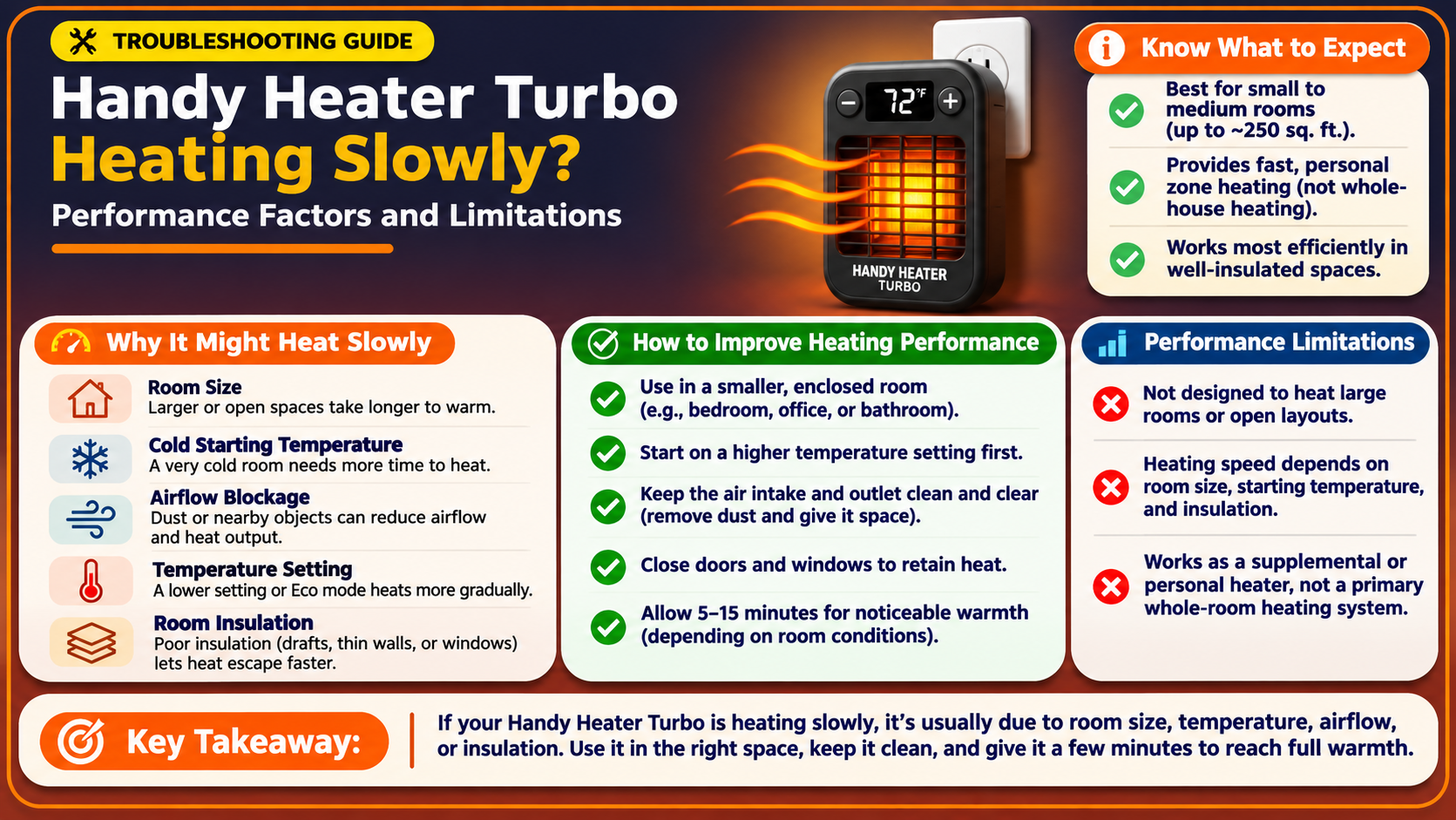
Place the heater on a flat, hard surface at least 3 feet away from walls, furniture, and curtains. Avoid corners and spots under a window or air conditioner draft.
Fix 6: Test Different Modes
If your heater has fan-only, low, and high modes, test each one. If the fan works but heat does not, the problem is likely the heating element or thermal fuse rather than the thermostat knob alone.
Fix 7: Check Warranty and Contact Support
If the heater is new, do not open it. Opening the casing can void the warranty. Keep your receipt and contact the seller for a replacement or repair.

Safety Checklist
- Always unplug the heater and let it cool before cleaning.
- Do not repair the heating element or wiring unless you are a qualified technician.
- Never cover the heater or dry clothes on it.
- Never leave it running while you sleep or when you are away.
- Keep children and pets away from the heater.
- If you smell burning, see sparks, or the plug is hot, stop using it immediately.
When Should You Replace the Heater?
| Situation | Recommended Action |
|---|---|
| Dusty, works after cleaning | Keep using, clean monthly |
| Trips safety cut-off often | Check airflow, then consider replacing |
| Knob has no response, no heat | Replace or use warranty |
| Burning smell, melted plug | Stop using immediately and replace |
| Over 2 to 3 seasons old with repeat faults | Replace with a quality model |
Repairing a low-priced heater often costs almost as much as a new one, and repair carries safety risks. Replacement is usually the smarter choice for older units.
How to Choose a Better Portable Heater
If your Handy Heater Turbo is beyond saving, look for these features before buying a new one:
- Adjustable thermostat: A precise digital or well-built dial control keeps the room comfortable and saves electricity.
- Tip-over protection: Automatically shuts off if the heater falls.
- Overheat protection: A must-have safety feature.
- Ceramic (PTC) heating element: Heats quickly and is generally safer than exposed coil types.
- Suitable wattage: Around 1000 to 1500W suits small to medium rooms. Check the power rating for your room size.
- Remote and timer: Useful for convenience and energy saving.
- Low noise fan: Important for bedrooms and offices.
- Certified quality: Look for recognized safety certifications and a clear warranty.
Quick Buyer Tips
Read recent customer reviews, pay attention to complaints about thermostat failure, and compare warranty length. A slightly higher price often means a better sensor and longer life. Avoid unbranded units with no safety information.
Maintenance Tips for a Longer Heater Life
- Clean vents and grille every 2 to 4 weeks during the season.
- Store the heater in a dry place, covered, in the off season.
- Do not wrap the power cord tightly around the unit.
- Avoid dropping or knocking the heater.
- Do not run it at maximum for 12 or more hours non-stop.
- Use a stable wall socket and avoid overloaded circuits.
Frequently Asked Questions
Why is my Handy Heater Turbo not heating but the fan works?
The heating element, thermal fuse, or thermostat may have failed. Check that overheat protection has reset and the vents are clean. If the problem continues, replace the unit.
Why does my heater keep turning on and off?
Short cycling is usually caused by blocked vents, poor placement, or a thermostat sensing the wrong temperature. Clean it and move it away from walls.
Can I replace the thermostat myself?
It is not recommended. Internal parts carry mains voltage and incorrect repair can cause fire or shock. Use a qualified technician or the warranty.
Is it safe to use a heater with a faulty thermostat?
No. A faulty thermostat can allow overheating. Stop using the heater until it is repaired or replaced.
How long does a portable heater thermostat last?
With normal seasonal use and regular cleaning, a quality heater can last several years, while cheaper units may fail sooner.
How do I reset my heater?
Unplug it, wait 15 to 30 minutes, check the vents, then plug it directly into a wall socket and start at a high thermostat setting.
Final Verdict
When your Handy Heater Turbo thermostat is not working, start with the simple steps: check the power, reset the unit, clean the vents, and reposition it. These fixes solve most cases. If the heater still fails, shows burning signs, or is already old, replacing it with a modern heater that has reliable thermostat control and safety protection is the safest and most cost-effective option. Stay warm and stay safe this winter.
Disclaimer: This article is for general information only. Always follow the manufacturer’s manual and consult a qualified technician for electrical repairs.